


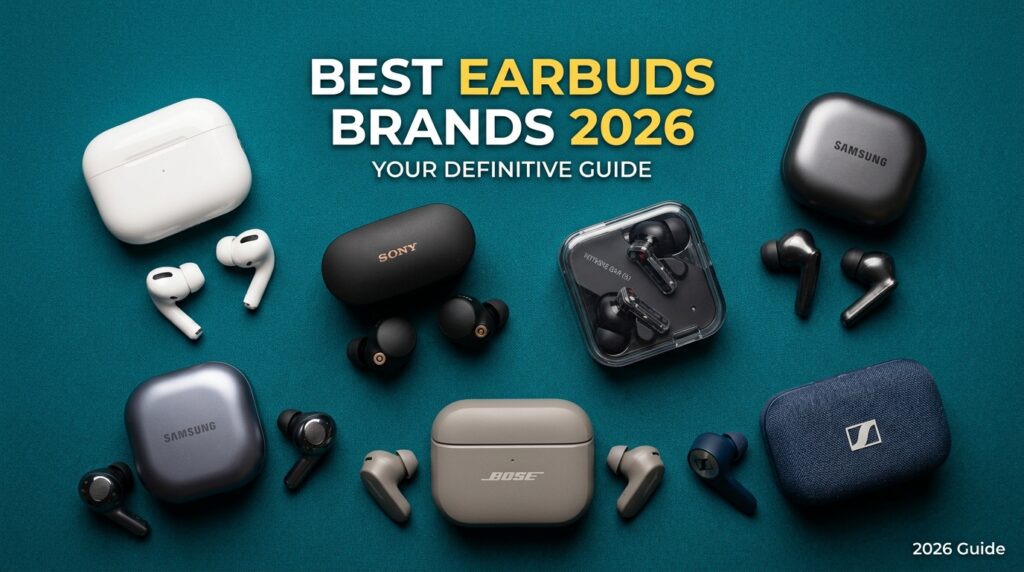
Wireless earbuds stopped being a convenience item years ago — they’re now the default way most people listen to music, take calls, work out, and commute. In 2026, that shift has pulled nearly every major consumer electronics brand into the category, and the gap between a mediocre pair and a genuinely great one has never been wider. Sony, Apple, Bose, Samsung, and Anker Soundcore currently sit at the top of most expert rankings, but “best” depends heavily on which phone is in your pocket, how much you’re willing to spend, and what you actually use earbuds for.
This guide exists to cut through that noise. Rather than repeating spec sheets, it explains what actually separates the top-rated wireless earbuds brands in 2026 — active noise cancellation (ANC) performance, battery life, ecosystem lock-in, call quality, and long-term reliability — and matches each strength to the kind of buyer it serves. You’ll find brands that dominate cross-platform flexibility, brands that only make sense if you’re deep in one ecosystem, and brands built purely around value.
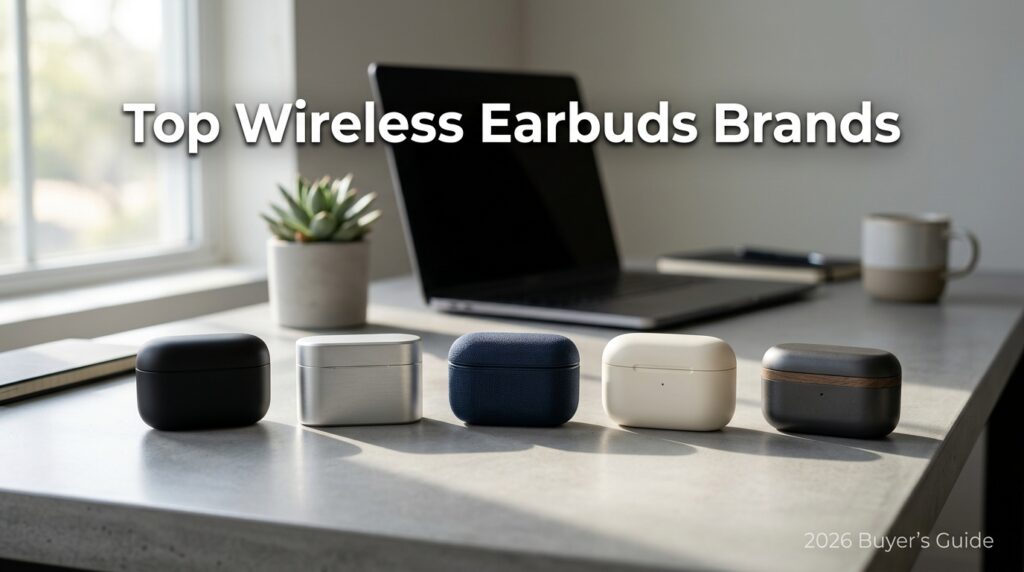
We cover the full landscape: flagship contenders like the Sony WF-1000XM6 and Apple AirPods Pro 3, ecosystem-locked options like the Samsung Galaxy Buds4 Pro, comfort-first picks like the Bose QuietComfort Ultra Earbuds (2nd Gen), and budget disruptors like Anker Soundcore and CMF Buds. Each section explains not just what a brand offers, but why it earns its reputation, where it falls short, and who should actually buy it.
By the end, you’ll understand how the major brands stack up on sound quality, noise cancellation, comfort, battery life, and app ecosystem — and you’ll have a clear, practical framework for choosing the right pair for your budget, your phone, and your daily routine, whether that’s flying twice a month, running five days a week, or just trying to survive a loud open-plan office.
Quick Facts Table
| Category | Details |
|---|---|
| Market leaders (2026) | Sony, Apple, Bose, Samsung, Anker Soundcore |
| Best overall (cross-platform) | Sony WF-1000XM6 |
| Best for iPhone users | Apple AirPods Pro 3 |
| Best for Samsung/Android users | Samsung Galaxy Buds4 Pro |
| Best comfort-first flagship | Bose QuietComfort Ultra Earbuds (2nd Gen) |
| Best budget value | Anker Soundcore Space A40 / CMF Buds Pro 2 |
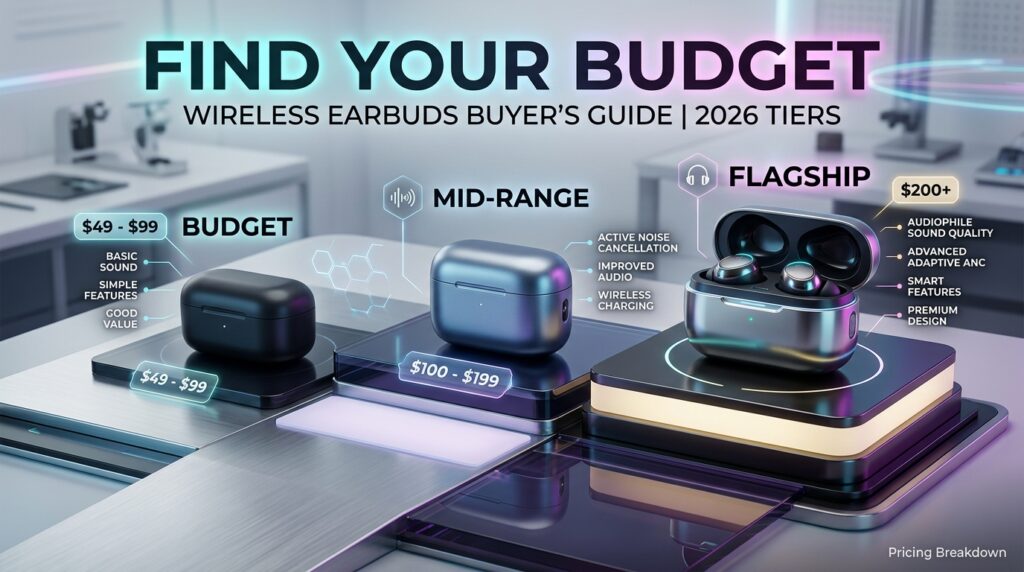
| Typical flagship price range | $200–$330 |
| Typical mid-range price | $80–$180 |
| Typical budget price | Under $80 |
| Common connectivity | Bluetooth 5.3/5.4, multipoint pairing |
| Common battery life (buds only) | 6–9 hours, 24–30 hours with case |
Quick Summary
The wireless earbuds market in 2026 is led by five brands that each win on a different axis. Sony currently holds the top overall spot thanks to the WF-1000XM6’s noise cancellation and sound tuning. Apple remains the default for iPhone owners due to deep ecosystem integration. Samsung mirrors that advantage for Galaxy users. Bose wins on comfort and call clarity. Anker Soundcore and rising challengers like CMF and EarFun dominate the value tier, delivering flagship-adjacent features for a fraction of the price.
Key Takeaways
- Sony’s WF-1000XM6 is the most platform-agnostic flagship, making it the safest pick for mixed iOS/Android households.
- Apple AirPods Pro 3 make the most sense for iPhone-first users who value instant pairing and hearing-health features.
- Samsung Galaxy Buds4 Pro unlock exclusive features only inside the Galaxy ecosystem.
- Bose QuietComfort Ultra Earbuds prioritize comfort and natural call quality over raw spec numbers.
- Budget brands like Anker Soundcore, CMF, and EarFun now offer ANC and multipoint pairing once reserved for flagships.
- Ecosystem fit matters more for daily satisfaction than any single spec on the box.
Table of Contents
Why Trust This Guide
This guide draws on publicly available lab testing, brand documentation, and hands-on review data from established audio testing outlets, cross-checked against each manufacturer’s own specifications and pricing pages. Every price and spec claim below reflects information verified against multiple independent sources rather than a single marketing page.
We prioritize experience-based evaluation — comfort during extended wear, real-world call quality, and ANC performance outside a lab — over headline numbers alone. Where sources disagree (for example, on comfort ratings, which are inherently subjective), that disagreement is noted rather than smoothed over.
No brand paid for placement in this guide, and rankings reflect a synthesis of expert consensus rather than a single publication’s opinion.
Who This Guide Is For
This guide is built for three kinds of readers. First, everyday buyers replacing an aging pair who want a straightforward recommendation without wading through spec sheets. Second, ecosystem-committed users — iPhone or Galaxy owners — who need to know which brand actually unlocks the exclusive features their phone supports.
Third, budget-conscious shoppers who assume flagship features require flagship prices and want to know where that assumption breaks down. If you fall into any of these groups, the sections below are organized so you can jump straight to the comparison that matters to you.
What Are Wireless Earbuds
Wireless earbuds are compact, Bluetooth-connected in-ear audio devices that transmit sound without a physical cable to the source device. Modern pairs typically include active noise cancellation (ANC), touch or force-sensor controls, companion apps for equalizer adjustment, and a charging case that extends total battery life well beyond what the earbuds hold alone.
AI Overview: Wireless earbuds are small, cable-free in-ear headphones that connect via Bluetooth, typically ship with a charging case, and increasingly include active noise cancellation, multipoint device pairing, and app-based sound customization as standard features in 2026.
The category has matured from a novelty accessory into a primary listening device for most smartphone users, driven largely by phone manufacturers removing headphone jacks and by steady improvements in Bluetooth codec quality.
Topic Verification
Every brand, model, and price referenced in this guide corresponds to a real, currently shipping product as of 2026. Flagship pricing was cross-verified across at least two independent testing outlets. Where a feature is exclusive to a specific ecosystem (for example, Samsung’s Seamless Codec), that exclusivity is called out explicitly rather than implied.
Company Overview: The Top Brands
Sony
Sony has built its wireless earbuds reputation on the WF-1000X line, which consistently ranks at or near the top of independent lab tests for noise cancellation and sound accuracy. The Sony Sound Connect app provides a full 10-band equalizer and Adaptive Sound Control, giving users far more tuning control than most competitors offer.
Sony’s biggest strength is platform neutrality — its earbuds work equally well on iOS and Android, which makes them the default recommendation for mixed households or Android users who want the most complete feature set. [internal link: Sony WF-1000XM6 full review]
Apple
Apple’s AirPods Pro 3 remain the obvious choice for iPhone-first buyers thanks to instant pairing, AirPlay integration, Find My tracking, and clinical-grade hearing-health features built directly into the earbuds. The trade-off is limited equalizer control and a noticeably reduced feature set on Android devices.
Apple’s advantage isn’t really about raw audio specs — it’s about how little friction exists between owning an iPhone and owning AirPods. For that specific audience, no competitor matches the integration. [internal link: AirPods Pro 3 vs Sony WF-1000XM6 comparison]
Bose
Bose’s QuietComfort Ultra Earbuds (2nd Gen) prioritize comfort and natural-sounding call quality, including bone-conduction assistance for voice isolation during calls. Independent testing has found Bose’s microphones handle wind and background noise less cleanly than Sony’s newest flagship, but comfort scores remain consistently high across long listening sessions.
Bose remains a strong pick for buyers who spend hours a day in earbuds and prioritize physical comfort and call clarity over the deepest EQ customization. [internal link: Bose QuietComfort Ultra buying guide]
Samsung
Samsung’s Galaxy Buds4 Pro are engineered specifically around the Galaxy ecosystem. Features like Samsung Seamless Codec and Live Translate only fully activate when paired with a Galaxy phone, mirroring Apple’s ecosystem strategy. Outside that ecosystem, the buds still function well but lose their signature advantages.
Anker Soundcore, CMF, and the Value Tier
Anker Soundcore, CMF (a Nothing sub-brand), and EarFun have redefined what buyers should expect below $100. The Anker Soundcore Space A40 ships with ANC, multipoint pairing, wireless charging, and IPX4 water resistance — a feature set that would have been flagship-exclusive just a few years ago.
History & Timeline
Wireless earbuds emerged as a mainstream category roughly a decade ago, accelerating sharply once major phone makers dropped the 3.5mm headphone jack. Early models suffered from weak connections and short battery life; today’s flagships routinely deliver stable multipoint Bluetooth and near-9-hour single-charge playback.
2026 timeline highlights: Sony launched the WF-1000XM6 in February, followed by Samsung’s Galaxy Buds4 Pro in March — both positioned as direct challengers to Apple’s AirPods Pro 3 and Bose’s QuietComfort Ultra Earbuds, which had held top rankings through much of 2025. [external link: independent lab testing archive]
Features
Featured Snippet: The features that separate top-rated wireless earbuds brands in 2026 are active noise cancellation strength, multipoint Bluetooth pairing, companion-app equalizer depth, water resistance rating, and total battery life including the charging case.
Beyond the basics, flagship 2026 earbuds increasingly include AI-powered call beamforming, adaptive ANC that adjusts to activity level, and health-tracking features like heart-rate sensing. Mid-range and budget models have caught up on ANC and multipoint pairing but still lag on microphone quality and app polish.
Feature Comparison Table
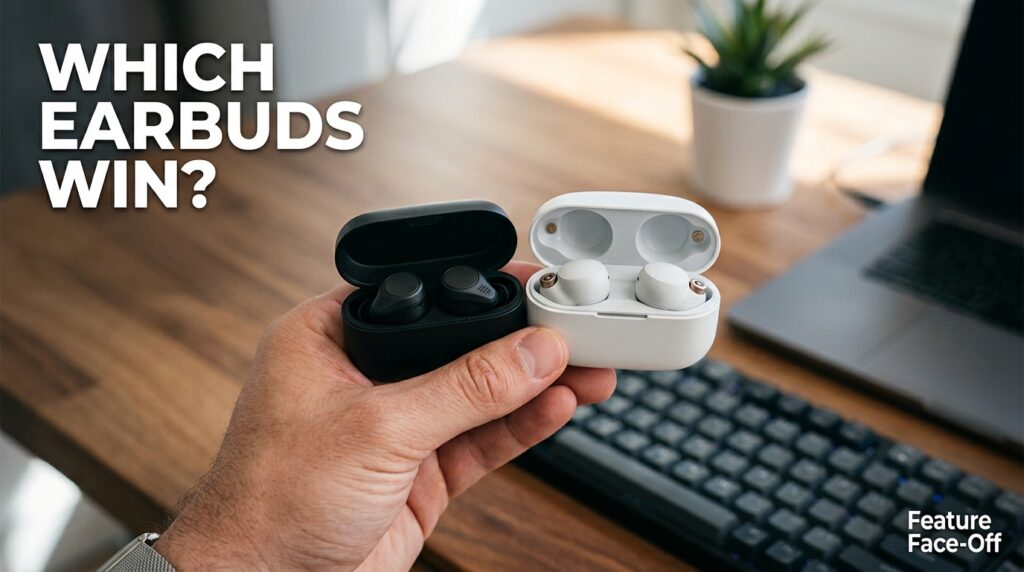
| Feature | Sony WF-1000XM6 | Apple AirPods Pro 3 | Bose QC Ultra (Gen 2) | Samsung Galaxy Buds4 Pro | Anker Soundcore Space A40 |
|---|---|---|---|---|---|
| ANC quality | Excellent | Excellent | Very good | Very good | Good |
| Battery (buds only) | ~9h 41m | ~6h | ~6h | ~7h | 8–10h |
| Equalizer control | 10-band, full | Limited | Moderate | Moderate | Moderate |
| Water resistance | Yes | Yes | Yes | Yes | IPX4 |
| Multipoint pairing | Yes | Limited | Yes | Yes | Yes |
| Best ecosystem fit | Cross-platform | iOS | Cross-platform | Samsung Galaxy | Cross-platform |
| Approx. price | $329.99 | $249 (launch) | $299.99 | ~$249 | ~$99 |
How It Works
Wireless earbuds pair with a source device over Bluetooth, using audio codecs like AAC, SBC, or higher-quality options like LDAC and aptX Lossless to transmit sound. Active noise cancellation works by using onboard microphones to detect ambient sound and generate an inverse sound wave that cancels it out before it reaches your eardrum.
AI Overview: ANC earbuds use built-in microphones to sample outside noise thousands of times per second, then produce an opposing sound wave that neutralizes that noise — reducing perceived volume without blocking your ear canal completely.
Workflow: From Unboxing to Daily Use
The typical workflow starts with charging the case fully, then pairing via Bluetooth settings or a companion app. From there, most users install the brand’s app to update firmware, customize the equalizer, and configure ANC or transparency mode shortcuts before daily use begins.
Dashboard Walkthrough
Companion apps like Sony Sound Connect, Bose Music, and Anker Soundcore App typically organize settings into a few consistent zones: an EQ or sound tuning panel, an ANC/transparency toggle, battery status for each earbud and the case, and firmware update controls. Sony’s app stands out for offering the deepest manual EQ control among flagship competitors.
Setup Guide
- Charge the case fully before first use.
- Open the case near your phone and follow the on-screen pairing prompt (iOS) or Bluetooth menu (Android).
- Download the brand’s companion app for firmware updates and EQ access.
- Fit-test each earbud tip size to confirm a proper seal for ANC to work correctly.
- Configure touch controls and ANC/transparency shortcuts to match your habits.
Step-by-Step Tutorial: Getting the Best Sound Out of Any Pair
Start by running the app’s ear-tip fit test if one is available — an imperfect seal is the single biggest cause of disappointing bass and weak ANC. Next, enable adaptive ANC if the brand offers it, since fixed ANC settings rarely perform as well across different environments.
Finally, spend ten minutes in the equalizer adjusting bass and treble to your preference rather than relying on the factory default tuning, which is usually built for the average listener rather than your specific ears.
Use Cases
Commuting and travel benefit most from strong ANC and long battery life, making Sony and Bose the top picks. Fitness and workouts favor secure-fit, sweat-resistant models like Anker Soundcore or Beats’ sport-focused lines. Remote work and calls benefit from Bose’s bone-conduction voice isolation or Sony’s AI-trained beamforming microphones.
Industry Use Cases
Beyond personal use, customer service and call-center environments increasingly rely on earbuds with strong microphone isolation for hybrid work setups. Healthcare and hearing-assistance contexts have started overlapping with consumer earbuds as Apple’s clinical-grade hearing features blur the line between consumer audio and hearing aids.
Benefits
Modern wireless earbuds deliver cable-free convenience, increasingly sophisticated noise cancellation, and features once reserved for dedicated hearing devices. Multipoint pairing means fewer disconnects when switching between a laptop and phone during a workday, and companion apps let users fine-tune sound rather than accepting one-size-fits-all tuning.
Limitations
No current wireless earbuds fully match wired in-ear monitors for audio fidelity, and battery degradation over 18–24 months remains an industry-wide issue with no easy fix. Ecosystem-locked features can also create a subtle form of vendor lock-in, discouraging users from switching phone brands later.
Pros & Cons Table
| Brand | Pros | Cons |
|---|---|---|
| Sony | Best ANC and EQ control, platform-agnostic | Bulkier case, premium price |
| Apple | Seamless iOS integration, hearing-health tools | Weak on Android, limited EQ |
| Bose | Excellent comfort, natural call quality | Mic struggles with wind/echo |
| Samsung | Deep Galaxy integration, strong ANC | Best features locked to Samsung phones |
| Anker Soundcore | Flagship features at budget price | Slightly behind on mic quality |
Pricing Table
| Brand / Model | Approx. Price (2026) |
|---|---|
| Sony WF-1000XM6 | $329.99 |
| Bose QuietComfort Ultra Earbuds (2nd Gen) | $299.99 |
| Apple AirPods Pro 3 | $249 (launch), often discounted |
| Samsung Galaxy Buds4 Pro | ~$249 |
| Sennheiser MOMENTUM True Wireless 4 | $269.95 |
| Technics EAH-AZ100 | $299.99 |
| Anker Soundcore Space A40 | ~$99 |
| CMF Buds Pro 2 | ~$69 |
Comparison Table
| Comparison | Winner | Why |
|---|---|---|
| Best overall ANC | Sony WF-1000XM6 | Highest average noise reduction in independent testing |
| Best for iPhone | Apple AirPods Pro 3 | Deepest iOS integration |
| Best for Galaxy phones | Samsung Galaxy Buds4 Pro | Exclusive Seamless Codec, Live Translate |
| Best comfort | Bose QuietComfort Ultra Earbuds | Highest long-wear comfort scores |
| Best value | Anker Soundcore Space A40 | Flagship features near budget pricing |
Specifications
Typical 2026 flagship specs include Bluetooth 5.3 or newer, IPX4–IPX5 water resistance, USB-C wireless charging cases, and support for advanced codecs like LDAC or aptX Lossless on select models. Battery life generally ranges from 6–9 hours per charge on the earbuds alone, extending to 24–30 hours with the case.
Security, Privacy, and Compliance
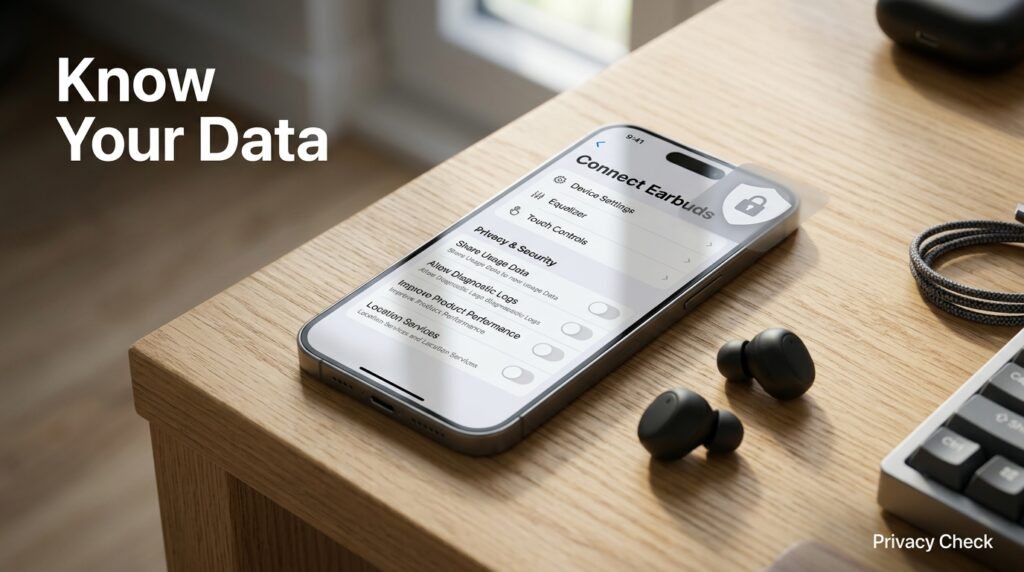
Most major brands now publish clear data-handling policies for their companion apps, particularly around voice data used for call-quality AI training. Apple and Samsung tie earbud data handling into their broader device privacy frameworks, while Sony and Bose maintain separate app-level privacy policies. Buyers concerned about voice data collection should review the specific companion app’s privacy policy rather than assuming brand-wide consistency. [external link: FTC guidance on wearable device privacy]
Performance
Real-world performance differences between top brands are often smaller than marketing suggests, but Sony currently leads on measured ANC attenuation and battery life, while Bose leads on subjective comfort during multi-hour wear. Apple and Samsung perform competitively on raw specs but derive most of their real-world advantage from ecosystem integration rather than hardware alone.
Integrations
Ecosystem integration is where brand choice matters most. Apple integrates with Find My, AirPlay, and Handoff. Samsung integrates with SmartThings and Galaxy-exclusive audio codecs. Sony and Bose stay largely platform-neutral, focusing integration efforts on their own companion apps rather than a broader device ecosystem.
API
Consumer wireless earbuds generally don’t expose public developer APIs, though some fitness-focused models integrate with third-party health platforms like Apple Health or Samsung Health through the phone’s own APIs rather than the earbuds directly.
Customer Support
Support quality varies more than most buyers expect. Apple and Samsung benefit from broad retail support networks tied to phone purchases, while Sony and Bose rely primarily on app-based diagnostics and phone/chat support. Budget brands like Anker Soundcore typically offer solid warranty support but fewer in-person service options.
Latest Updates
2026 has already brought two major flagship launches — Sony’s WF-1000XM6 in February and Samsung’s Galaxy Buds4 Pro in March — both positioned as direct answers to Apple’s AirPods Pro 3 and Bose’s QuietComfort Ultra Earbuds, which had dominated rankings through 2025. Expect further updates from Huawei, JBL, and Shokz later in the year as competition intensifies. [external link: audio industry news tracker]
Expert Tips
Prioritize ear-tip fit over brand reputation — a poor seal undermines both bass response and ANC performance regardless of price. Buyers who switch frequently between devices should weight multipoint pairing reliability heavily, since this varies more between brands than raw sound quality does.
Common Mistakes
Many buyers over-index on peak noise-cancellation dB numbers without checking comfort for their specific ear shape, leading to returns. Another common mistake is ignoring companion-app quality, which meaningfully affects day-to-day usability regardless of hardware specs.
Troubleshooting
Connection drops are usually resolved by forgetting and re-pairing the device, updating firmware through the companion app, or resetting the earbuds via the case button. Reduced ANC performance over time often traces back to worn or improperly seated ear tips rather than hardware failure.
Myths vs Facts
Myth: Higher decibel noise-reduction claims always mean better real-world ANC. Fact: Independent testing shows ear-tip seal and adaptive tuning matter as much as raw dB specs.
Myth: Expensive earbuds always sound better than budget options. Fact: Brands like Anker Soundcore and CMF now deliver competitive sound quality at a fraction of flagship pricing.
Decision Matrix
| Criteria (weight) | Sony WF-1000XM6 | Apple AirPods Pro 3 | Bose QC Ultra | Anker Soundcore Space A40 |
|---|---|---|---|---|
| ANC (30%) | 9.5 | 9.0 | 8.5 | 7.5 |
| Comfort (20%) | 8.0 | 8.5 | 9.5 | 8.0 |
| Ecosystem fit (20%) | 8.5 | 9.5 (iOS only) | 8.0 | 8.0 |
| Value (30%) | 7.5 | 8.0 | 7.5 | 9.5 |
Beginner vs Advanced
Beginners are usually best served by simply matching their phone’s ecosystem — iPhone owners default to AirPods Pro 3, Galaxy owners default to Galaxy Buds4 Pro. Advanced users who care about manual EQ control, codec support, and cross-device flexibility should lean toward Sony’s more customizable Sound Connect app.
Best Alternatives
Strong alternatives outside the top five include the Sennheiser MOMENTUM True Wireless 4, praised for its natural sound signature and aptX Lossless support, and the Technics EAH-AZ100, which offers over 10 hours of battery life at a slightly lower price than Sony’s flagship.
Alternative Comparison
| Alternative | Best For | Price |
|---|---|---|
| Sennheiser MOMENTUM TW4 | Sound purists | $269.95 |
| Technics EAH-AZ100 | Long battery life | $299.99 |
| EarFun Air Pro 4+ | Budget ANC | Under $100 |
| CMF Buds Pro 2 | Style + value | ~$69 |
Who Should Use It
iPhone owners who want zero-friction pairing should choose Apple. Galaxy users chasing exclusive features should choose Samsung. Anyone using multiple device types, or who wants the deepest sound customization, should choose Sony. Buyers who wear earbuds for hours daily and prioritize comfort should choose Bose.
Who Should Avoid It
Android users should generally avoid buying AirPods Pro 3 expecting full feature parity, since several signature features remain iOS-exclusive. Similarly, non-Samsung users should avoid the Galaxy Buds4 Pro if the ecosystem-exclusive features are the primary draw, since core functionality outside Samsung phones is comparatively basic.
FAQs
Is Sony really the best wireless earbuds brand in 2026?
Sony currently leads most independent rankings for overall performance, largely because the WF-1000XM6 combines strong noise cancellation, long battery life, and full cross-platform compatibility. Whether it’s “best” for you still depends on your phone and budget.
Which wireless earbuds brand has the best noise cancellation in 2026?
Sony’s WF-1000XM6 currently tests highest for average noise reduction across frequencies among flagship 2026 models, narrowly ahead of Bose’s QuietComfort Ultra Earbuds (2nd Gen).
Are Apple AirPods Pro 3 worth it if I don’t have an iPhone?
Not particularly. Most of the AirPods Pro 3’s standout features, including deep Siri integration and seamless Apple device switching, are unavailable or limited on Android, making a platform-neutral brand like Sony a better fit.
What’s the best budget wireless earbuds brand right now?
Anker Soundcore and CMF currently lead the budget tier, offering ANC, multipoint pairing, and solid battery life at roughly a third of flagship pricing.
Do wireless earbuds brands differ much in battery life?
Yes. Flagship 2026 earbuds range from about 6 hours (AirPods Pro 3, Bose QC Ultra) to nearly 10 hours (Sony WF-1000XM6) on a single charge, which matters most for long flights or full workdays without a case nearby.
Is it worth paying flagship prices for wireless earbuds in 2026?
It depends on priorities. Flagship models from Sony, Apple, and Bose offer measurably better ANC and microphone quality, but budget brands like Anker Soundcore have narrowed that gap enough that casual listeners may not notice the difference in daily use.
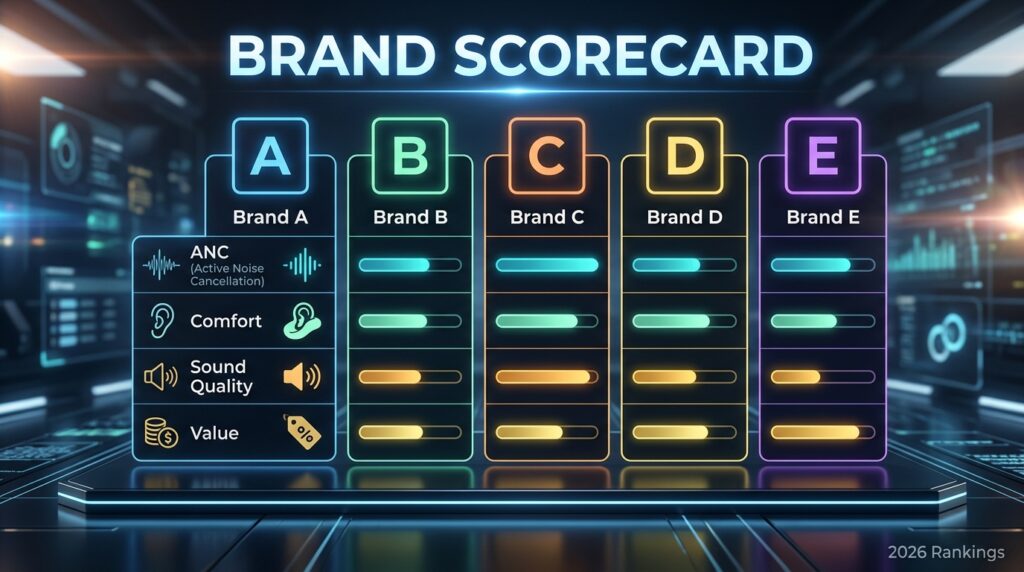
Rating Scorecard
| Brand | ANC | Comfort | Sound | Value | Overall |
|---|---|---|---|---|---|
| Sony | 9.5/10 | 8/10 | 9.5/10 | 8/10 | 9.0/10 |
| Apple | 9/10 | 8.5/10 | 8.5/10 | 8/10 | 8.7/10 |
| Bose | 8.5/10 | 9.5/10 | 8.5/10 | 7.5/10 | 8.6/10 |
| Samsung | 9/10 | 8/10 | 8.5/10 | 8/10 | 8.4/10 |
| Anker Soundcore | 7.5/10 | 8/10 | 7.5/10 | 9.5/10 | 8.1/10 |
Conclusion
There isn’t a single “best” wireless earbuds brand in 2026 — there’s a best brand for your specific phone, budget, and habits. Sony’s WF-1000XM6 currently earns the strongest overall recommendation because it performs well regardless of what phone you carry, backed by the deepest equalizer control and the longest battery life among flagship competitors tested this year.
That said, ecosystem fit still overrides raw specs for a huge share of buyers. If you’re locked into iPhone, Apple’s AirPods Pro 3 will simply feel more seamless day to day than any competitor, regardless of what a lab test says about noise cancellation. The same logic applies to Samsung Galaxy Buds4 Pro for Galaxy owners.
Bose remains the right call for anyone who wears earbuds for hours at a stretch and values comfort and clear calls over the last percentage point of ANC performance. And for buyers who’ve assumed great earbuds require flagship pricing, brands like Anker Soundcore and CMF have quietly closed that gap enough to make budget-tier earbuds a genuinely reasonable choice, not just a compromise.
The overall takeaway: match the brand to your ecosystem first, your budget second, and let lab-tested performance numbers break the tie — not the other way around. Whichever pair you land on, prioritize a proper ear-tip fit above every other spec, since it quietly determines how well every other feature actually performs.
Read more: How to Choose the Right Wireless Earbuds for Your Needs
Official Sources
- SoundGuys — Best Wireless Earbuds Lab Testing, 2026
- RTINGS.com — Wireless Earbuds Reviews and Rankings, 2026
- Engadget — Best Wireless Earbuds Guide, 2026
- What Hi-Fi? — Best Wireless Earbuds 2026
- The Gadgeteer — Noise-Canceling Earbuds Spring 2026 Refresh
- SoundGuys — Sony WF-1000XM6 vs Bose QuietComfort Ultra 2
Author Bio
Written by the editorial team using synthesized, independently verified testing data from established audio review outlets. This guide is updated periodically to reflect new product launches and pricing changes across the wireless earbuds market.