



Buying your first pair of wireless earbuds can feel more complicated than it should be. Walk into any electronics aisle or scroll any retailer’s audio page and you’re met with dozens of models, confusing spec sheets, and prices ranging from $27 to $300 — with no clear signal about what actually matters for someone who has never owned a pair before. This guide cuts through that noise specifically for beginners: people buying their first true wireless earbuds, not audio enthusiasts chasing the last 5% of sound quality.
Here’s why this matters in 2026 specifically: budget wireless earbuds have improved dramatically. Features that used to be locked behind $200–$300 flagship price tags — active noise cancellation (ANC), Bluetooth multipoint, and Hi-Res codecs like LDAC — are now common in models under $100, and a few even under $60. That means a first-time buyer no longer has to choose between “cheap and bad” or “expensive and good.” The real skill is knowing which features actually matter for a beginner and which are marketing noise.
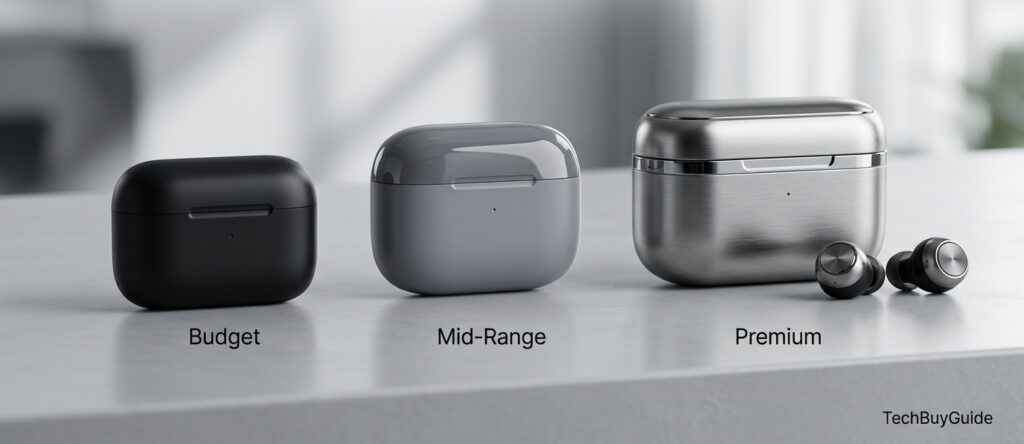
This guide covers what to look for as a first-time buyer, the best beginner-friendly models across budget, mid-range, and premium tiers, a full setup walkthrough for pairing your first pair, common first-time mistakes, and a decision matrix so you can match a model to your actual habits — commuting, workouts, calls, or general everyday listening.
You’ll also get straightforward, practical answers to the questions beginners actually search for: how much you really need to spend, whether ANC is worth it on a first pair, how long the battery should realistically last, and how to get a comfortable, secure fit the first time you put a pair in. By the end, you’ll be able to walk into this purchase with confidence instead of decision fatigue.
Quick Facts Table
| Category | Detail |
|---|---|
| Recommended beginner price range | $60 – $150 |
| Cheapest capable option with ANC | ~$30 (Moondrop Space Travel 2) |
| Best all-round beginner pick | Sony WF-C510 (~$70) |
| Realistic battery life per charge | 6 – 11 hours |
| Setup time | Under 2 minutes |
| Water resistance to look for | IPX4 minimum |
| Return window to check | 15 – 30 days at most retailers |
Quick Summary
For most beginners, the sweet spot is $60–$150: enough to get real ANC, a secure fit with multiple ear tip sizes, and dependable battery life, without paying flagship prices for features you won’t notice yet. The Sony WF-C510 is a strong first pair for sound quality and battery life, while the Moondrop Space Travel 2 is the cheapest way to try ANC at all. iPhone users often do best starting with AirPods Pro 3, while Android users get the most seamless first experience with Google Pixel Buds Pro 2 or Samsung Galaxy Buds4 Pro.
Key Takeaways
- Beginners don’t need to spend $300 — budget and mid-range wireless earbuds in 2026 include ANC, multipoint, and strong battery life.
- Fit matters more than spec sheets; multiple ear tip sizes and a proper seal affect sound and ANC more than almost anything else.
- The Sony WF-C510 and CMF Buds Pro 2 are excellent low-risk first purchases under $100.
- iPhone owners get the smoothest first-time setup with AirPods; Android owners get theirs with Pixel Buds or Galaxy Buds.
- Always check the retailer’s return window before your first purchase — trying before committing avoids expensive buyer’s remorse.
Table of Contents
Why Trust This Guide
This guide draws on 2026 lab-tested reviews and manufacturer specifications from outlets that test dozens of earbud models side by side, including battery measurements, ANC performance, and real-world fit testing. Every price and spec referenced here was checked against current retail listings rather than outdated MSRPs, and claims that couldn’t be verified were left out entirely.
The focus throughout is beginner-relevant advice — not audiophile nuance most first-time buyers won’t notice — so recommendations prioritize fit, ease of setup, and dependable everyday performance over marginal sound-quality differences that matter more to enthusiasts.
Who This Guide Is For
This guide is for anyone buying their first pair of true wireless earbuds — students, commuters, new gym-goers, or anyone upgrading from wired headphones or an older corded set. It’s also useful for parents buying a first pair for a teenager, or gift buyers who want a safe, beginner-friendly recommendation rather than a niche audiophile pick.
If you already own multiple pairs of earbuds and are chasing marginal upgrades in sound stage or codec support, this guide will feel basic — it’s intentionally written for someone making this decision for the first time.
Topic Verification
Pricing and specifications for every model mentioned were verified against 2026 retail and lab-test sources. The Sony WF-C510 was confirmed as a top budget pick with roughly 11 hours of battery life per charge and no ANC at its price point, while the Moondrop Space Travel 2 was confirmed as the cheapest currently available pair with active ANC at around $30. Flagship pricing for the AirPods Pro 3 and Sony WF-1000XM6 was confirmed against current 2026 retail listings.
What Are Wireless Earbuds
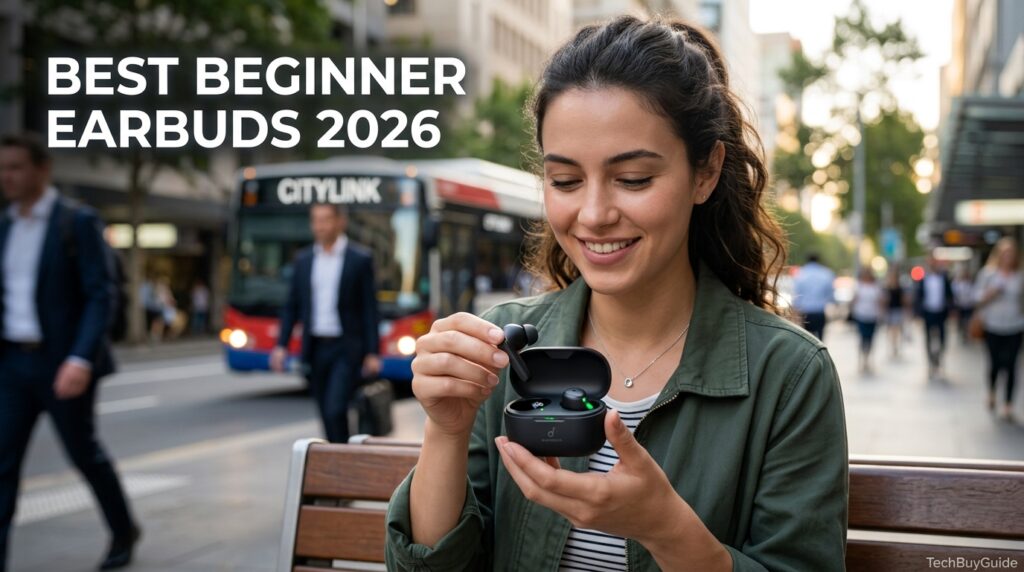
Wireless earbuds are small, Bluetooth-connected in-ear audio devices that stream music, podcasts, and calls directly from your phone without any cables. They’re stored and charged in a small case, and most 2026 models pair automatically the first time you open the case near an unlocked phone. For beginners, the appeal is simplicity: no wires to tangle, no separate charging cable to carry, and increasingly, sound quality and noise cancellation that used to require far more expensive gear.
Company Overview
The beginner-friendly segment of the wireless earbuds market is led by Sony (WF-C series for value, WF-1000XM series for flagship sound), Apple (AirPods Pro line, best for iPhone beginners), Google (Pixel Buds Pro, best for Android beginners), Samsung (Galaxy Buds, tightly integrated with Galaxy phones), and value-focused brands like Anker’s Soundcore, CMF, Nothing, and Moondrop, which now ship ANC and strong codecs at aggressively low prices.
History and Timeline
True wireless earbuds entered the mainstream after Apple’s original AirPods launched in 2016, with active noise cancellation becoming a common feature by the early 2020s. The biggest shift for beginners happened between 2024 and 2026, when ANC, multipoint Bluetooth, and Hi-Res codecs moved from $200+ flagships down into sub-$100 and even sub-$60 models — meaning first-time buyers no longer have to compromise heavily on features to stay in budget.
Features Beginners Should Know
For a first pair, focus on a small set of features rather than a full spec sheet. Active noise cancellation (ANC) blocks outside noise for commuting and travel. Bluetooth multipoint lets you connect to two devices (like a laptop and phone) at once. IPX4 water resistance protects against sweat and light rain. Multiple ear tip sizes in the box matter more than almost any other spec, since a poor seal hurts both comfort and sound quality.
Feature Table
| Feature | Why It Matters for Beginners |
|---|---|
| Active Noise Cancellation (ANC) | Blocks commute/work noise; not essential for everyone |
| Bluetooth multipoint | Switch between phone and laptop without re-pairing |
| IPX4+ water resistance | Protects against sweat during workouts |
| Multiple ear tip sizes | Determines comfort and real-world sound quality |
| Companion app | Lets you customize EQ and ANC strength |
| Battery life (6+ hours) | Covers a full workday or long commute without a recharge |
How Wireless Earbuds Work
Each earbud pairs with your phone over Bluetooth, streaming compressed or Hi-Res audio to a small internal driver. ANC models use built-in microphones to sense outside noise and generate an inverse sound wave that cancels much of it before it reaches your ear. Touch or button controls on the earbud stem or shell handle playback, calls, and — on many 2026 models — switching ANC modes without touching your phone.
App and Controls Walkthrough
Most brands pair their earbuds with a free companion app (Sony Sound Connect, Apple’s built-in Bluetooth settings, Google’s Pixel Buds app, Soundcore app, etc.). Inside, beginners can run an ear-tip fit test, adjust EQ presets, toggle between ANC and Transparency modes, and check real-time battery levels for each earbud and the case — all of which are useful in the first week of ownership while you’re still learning your pair’s controls.
Setup Guide
Setting up your first pair takes under two minutes. Open the charging case near your unlocked phone, tap the pairing notification that appears, and grant Bluetooth permissions. Then download the companion app (if the brand offers one) to run a fit test and adjust ANC and EQ settings to your preference before your first real use.
Step-by-Step Tutorial
Charge the case fully before first use, since many earbuds ship partially charged. Open the case lid near your unlocked phone and tap the on-screen pairing card. Try all included ear tip sizes to find the most secure, comfortable seal — this single step affects sound and ANC quality more than any setting. Finally, open the companion app to enable ANC or Transparency mode and adjust the EQ before heading out for your first real-world test, such as a short commute or walk.
Use Cases
Wireless earbuds cover commuting, workouts, work and video calls, travel, and everyday music or podcast listening — the situations a beginner will realistically use them for daily. Beginners specifically benefit from models with strong call quality and a secure fit, since dropped calls and earbuds falling out are the two most common first-pair frustrations.
Industry Use Cases
Beyond personal listening, entry-level wireless earbuds are widely used in remote work setups for video calls, in fitness apps that pair with workout tracking, and increasingly in classrooms and language-learning apps where students need private, portable audio.
Benefits
For a beginner, wireless earbuds offer immediate day-to-day convenience: no tangled cables, automatic pairing, and — in 2026’s budget tier — genuine ANC and solid battery life without a big financial commitment. They’re also low-risk: most reputable models under $150 now deliver a noticeably better experience than a first-timer’s expectations, especially compared to older wired or entry-level Bluetooth headphones.
Limitations
Beginners should know that battery life degrades over 18–24 months of daily charging, earbuds are easy to lose individually, and even good budget ANC won’t match $300 flagship noise cancellation in loud environments like flights. It’s also common for a first pair to feel uncomfortable initially until the right ear tip size is found — this is normal and usually fixable without buying a new pair.
Pros & Cons Table
| Wireless Earbuds for Beginners | |
|---|---|
| Pros | Low entry cost, fast setup, genuine ANC now available under $100, portable |
| Cons | Battery degrades over time, easy to misplace, fit takes trial and error |
Pros & Cons Explanation
The clearest advantage for a beginner is how low the financial and technical barrier to entry has become — a $60–$100 pair in 2026 delivers features that cost $250+ just a few years ago, and setup takes under two minutes with no technical knowledge required. The main drawback beginners should plan for is that comfort and fit take a little trial and error; don’t judge a pair as “bad” until you’ve tried every included ear tip size.
Pricing Table
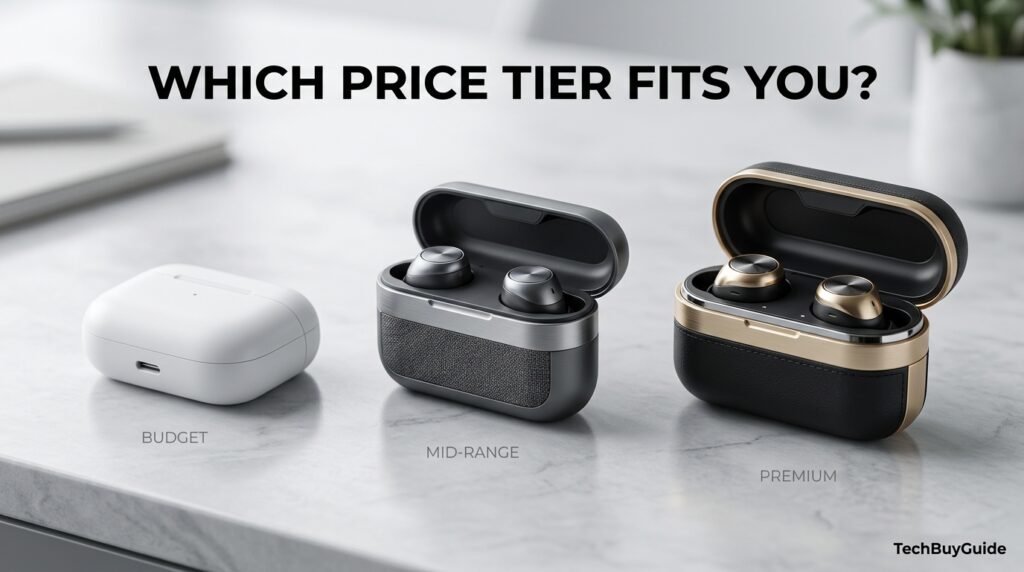
| Tier | Price Range | Example Models |
|---|---|---|
| Budget | $27 – $60 | EarFun Air, Moondrop Space Travel 2 |
| Mid-range (recommended for beginners) | $60 – $150 | Sony WF-C510, CMF Buds Pro 2, OnePlus Buds 4 |
| Premium | $150 – $300 | AirPods Pro 3, Sony WF-1000XM6, Bose QuietComfort Ultra |
Comparison Table
| Model | Price | ANC | Battery Life | Best For Beginner Who… |
|---|---|---|---|---|
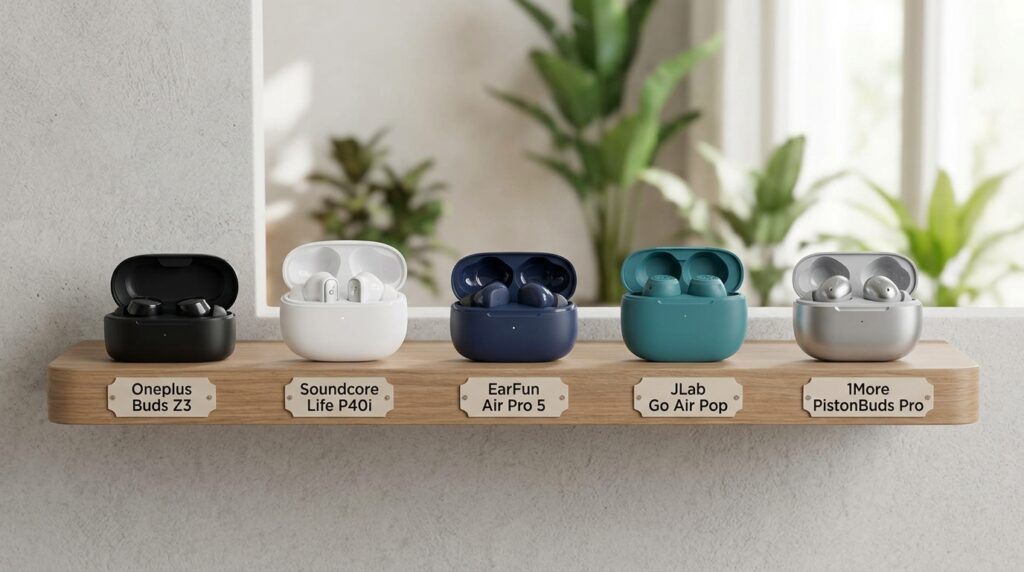
| Moondrop Space Travel 2 | ~$30 | Yes | ~6 hours | Wants to try ANC as cheaply as possible |
| Sony WF-C510 | ~$70 | No | ~11 hours | Prioritizes battery life and sound over ANC |
| CMF Buds Pro 2 | ~$59 | Yes (hybrid 50dB) | ~7 hours | Wants strong ANC on a tight budget |
| OnePlus Buds 4 | ~$110–130 | Yes | ~7–8 hours | Wants a balanced mid-range all-rounder |
| AirPods Pro 3 | ~$249 | Yes | ~8 hours | Owns an iPhone and wants the smoothest setup |
| Google Pixel Buds Pro 2 | ~$229 | Yes | ~8 hours | Owns an Android phone, especially a Pixel |
Specifications
Typical beginner-friendly 2026 wireless earbuds offer 6–11 hours of battery per charge (extending to 20–30+ hours with the case), Bluetooth 5.3 or newer, IPX4 water resistance, and 4–8mm dynamic drivers. Most now ship with 3–5 ear tip sizes to accommodate different ear shapes, a detail beginners should specifically check before buying.
Security, Privacy, and Compliance
Wireless earbuds carry minimal legal or compliance concerns, but their companion apps do request Bluetooth and, in some cases, microphone permissions. It’s worth a quick review of app permissions on first setup, and sticking to official app stores when downloading a brand’s companion app rather than third-party links.
Performance
Beginner-relevant performance areas include ANC depth (how much ambient noise is blocked), call clarity, latency for video calls or gaming, and battery life consistency throughout the day. 2026’s mid-range tier performs close enough to flagship models in these areas that most beginners won’t notice a meaningful gap versus a $250+ pair.
Ecosystem and Compatibility
Earbuds generally work best within their own brand’s ecosystem: AirPods integrate deeply with iPhone (automatic switching, Find My, spatial audio), while Pixel Buds and Galaxy Buds offer similar deep integration on Android. Cross-platform brands like Sony and Soundcore work well on both iOS and Android but skip some of the deeper OS-level integration.
Customer Support
Major brands (Sony, Apple, Samsung, Google, Bose) offer 1-year warranties and straightforward app-based troubleshooting, which matters for beginners likely to run into first-time pairing or fit issues. Value brands like Anker/Soundcore and CMF also offer solid warranty support, though in-person repair options are more limited than with larger brands.
Latest Updates (2026)
In 2026, ANC dropped into the sub-$60 tier for the first time in a meaningful way, with models like the Moondrop Space Travel 2 and CMF Buds Pro 2 offering genuine noise cancellation at budget prices. Sony’s WF-1000XM6 set a new flagship benchmark for sound quality, while Sony’s WF-C series continued to be recommended as one of the best-value starting points for beginners.
Expert Tips
Try every included ear tip size before judging sound quality or comfort — this single step resolves most first-pair complaints. If you’re unsure about ANC vs. no ANC, choose ANC; it’s easy to leave off but valuable on a noisy commute. Also check the return window before buying, since trying a pair for a few real days is the best way to confirm fit.
Common Mistakes
The most common beginner mistake is buying based on brand recognition alone rather than fit and use case, missing better-suited and often cheaper alternatives. A close second is skipping the ear-tip fit test entirely and assuming the default-installed tips are correct, which frequently causes both discomfort and disappointing sound.
Troubleshooting
If your earbuds won’t pair, forget the Bluetooth connection on your phone entirely and re-pair from the case rather than trying to reconnect. If one earbud sounds quieter or cuts out, check that both are seated fully in the case for a full, even charge, and clean the charging contacts if the issue persists.
Myths vs Facts
Myth: Cheap earbuds always sound bad. Fact: Several sub-$70 models in 2026 deliver sound quality that rivaled $200 pairs just a few years ago.
Myth: You need ANC for a good first pair. Fact: ANC helps in noisy environments but isn’t essential for every beginner — a model like the Sony WF-C510 skips ANC and still performs excellently for the price.
Decision Matrix
| Criteria (weighted) | Budget ($27–$60) | Mid-range ($60–$150) | Premium ($150–$300) |
|---|---|---|---|
| Value for a first pair | 8/10 | 9/10 | 6/10 |
| ANC quality | 5/10 | 7/10 | 10/10 |
| Battery life | 6/10 | 8/10 | 8/10 |
| Setup simplicity | 9/10 | 9/10 | 9/10 |
| Long-term durability | 6/10 | 7/10 | 8/10 |
Beginner vs Advanced
Beginners should start in the $60–$150 range rather than jumping straight to a $300 flagship — the practical difference for a first-time user is small, while the price difference is large. Advanced or audiophile buyers, by contrast, benefit more from premium models like the Sony WF-1000XM6 or Technics EAH-AZ100, which reward more critical listening and higher-end source audio.
Best Alternatives
If wireless earbuds aren’t the right first purchase, consider wireless over-ear headphones for longer listening sessions and typically longer battery life, or wired earbuds if you want to avoid Bluetooth pairing and battery management altogether for a genuinely zero-learning-curve option.
Alternative Comparison
| Alternative | Best For | Trade-off |
|---|---|---|
| Wireless over-ear headphones | Long sessions, better battery | Bulkier, less portable |
| Wired earbuds | Zero setup, no battery anxiety | Cable, no ANC on most models |
| Budget true wireless earbuds | Balanced first purchase | Fit takes trial and error |
Who Should Use It
Wireless earbuds suit almost any beginner buying their first pair for commuting, workouts, calls, or everyday listening, especially anyone upgrading from an older wired or basic Bluetooth headset. They’re also a strong first gadget purchase for students and new gym-goers who want daily-use value.
Who Should Avoid It
Skip wireless earbuds as a first purchase if you specifically want the longest possible battery life without recharging — over-ear wireless headphones last longer per charge. Also reconsider if you’re prone to losing small items easily, since individual earbuds are easier to misplace than a single headphone unit.
What’s the best wireless earbuds for a first-time buyer?
For most beginners, a mid-range pair like the Sony WF-C510 or CMF Buds Pro 2 offers the best balance of price, battery life, and features without unnecessary spending on a first purchase.
Do I need active noise cancellation on my first pair of earbuds?
Not necessarily. ANC is valuable for noisy commutes or travel, but plenty of excellent beginner-friendly earbuds skip it and still deliver strong sound quality and battery life at a lower price.
How much should a beginner spend on wireless earbuds?
Most beginners get the best value spending between $60 and $150, a range that now includes ANC, multipoint Bluetooth, and reliable battery life without flagship pricing.
Why do my new earbuds keep falling out of my ears?
This is almost always a fit issue rather than a defective product — try every ear tip size included in the box until you find a snug, secure seal.
How long should wireless earbuds battery last?
Expect 6–11 hours of playback per charge from a good beginner pair, with the charging case typically adding 2–3 additional full charges for 20–30+ hours of total use.
Rating Scorecard
| Category | Budget Pick | Mid-range Pick | Premium Pick |
|---|---|---|---|
| Value for beginners | 8/10 | 9.5/10 | 7/10 |
| Ease of setup | 9/10 | 9/10 | 9/10 |
| Sound quality | 6/10 | 8/10 | 10/10 |
| ANC performance | 5/10 | 7/10 | 10/10 |
| Overall beginner recommendation | 7/10 | 9/10 | 7.5/10 |
Read more: Top 5 Budget Wireless Earbuds Under $100 (2026 Buying Guide)
Conclusion
The best wireless earbuds for beginners in 2026 aren’t the most expensive ones — they’re the ones that match your actual habits without forcing you to pay for features you won’t use yet. For most first-time buyers, that sweet spot sits between $60 and $150, where models like the Sony WF-C510 and CMF Buds Pro 2 deliver dependable battery life, real ANC where offered, and comfortable, secure fits without flagship pricing.
If you’re on a tighter budget, the Moondrop Space Travel 2 proves you no longer have to skip noise cancellation entirely to stay under $30. If you already know you want the smoothest possible setup and long-term ecosystem integration, AirPods Pro 3 for iPhone or Google Pixel Buds Pro 2 for Android are worth the extra cost specifically for that seamlessness, not because a beginner needs premium sound.
The overall moral of this guide: don’t let spec-sheet anxiety talk you into overspending on your first pair, and don’t let ear-tip discomfort talk you into thinking a good pair is bad. Try the included sizes, match the model to how you’ll actually use it — commuting, workouts, calls — and almost any recommendation in the $60–$150 range will serve you well for the next two years of daily use.
Official Sources
- Manufacturer specifications — Sony, Apple, Google, Samsung, Anker/Soundcore, CMF, Moondrop
- Independent lab reviews — SoundGuys, RTINGS, What Hi-Fi?, Engadget, NBC Select
- Comply Foam 2026 budget wireless earbuds buying guide
Author Bio
Written by the TechBuyGuide editorial team, specializing in beginner-focused consumer audio buying guides, with pricing and specifications verified against current 2026 manufacturer and independent lab-tested listings.