


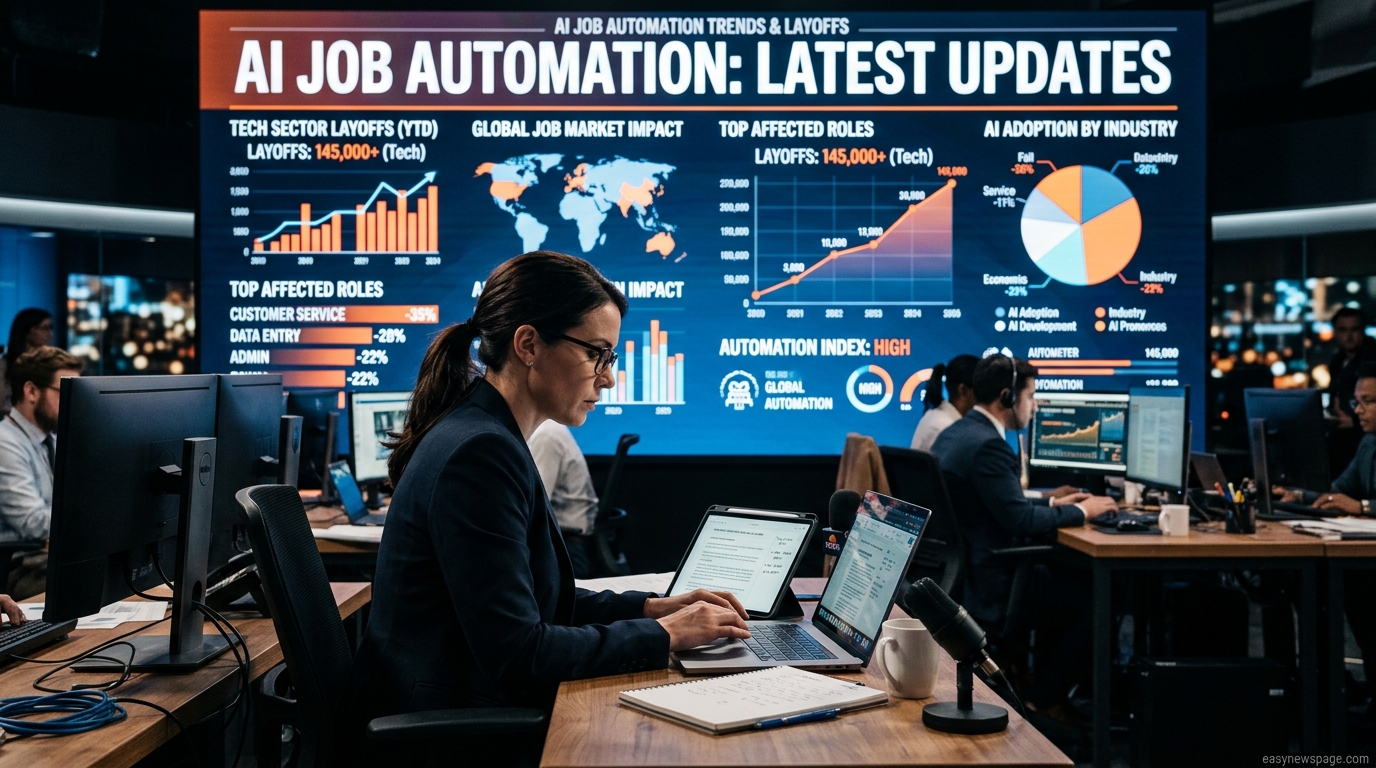
If you stopped checking the headlines a few months ago, the picture has shifted more than you’d expect. AI job automation moved from a background trend to the dominant storyline of 2026’s labor market in just a few months, with layoff-tracking firms, investment banks, and major research labs all revising their numbers upward since spring. This guide rounds up the developments you likely missed — the specific data points, corporate moves, and research findings from the past several months that actually change how you should think about your own job security.
We cover the layoff numbers that broke records in March and April, the newest tracking data showing over 200,000 U.S. workers affected by AI-linked cuts through August, and the Stanford research pinpointing exactly which age group is bearing the brunt of the disruption. We also cover the pushback: research firms like Forrester now argue that a meaningful share of “AI layoffs” are actually ordinary financial cuts relabeled to sound cutting-edge, a practice some analysts call AI washing.
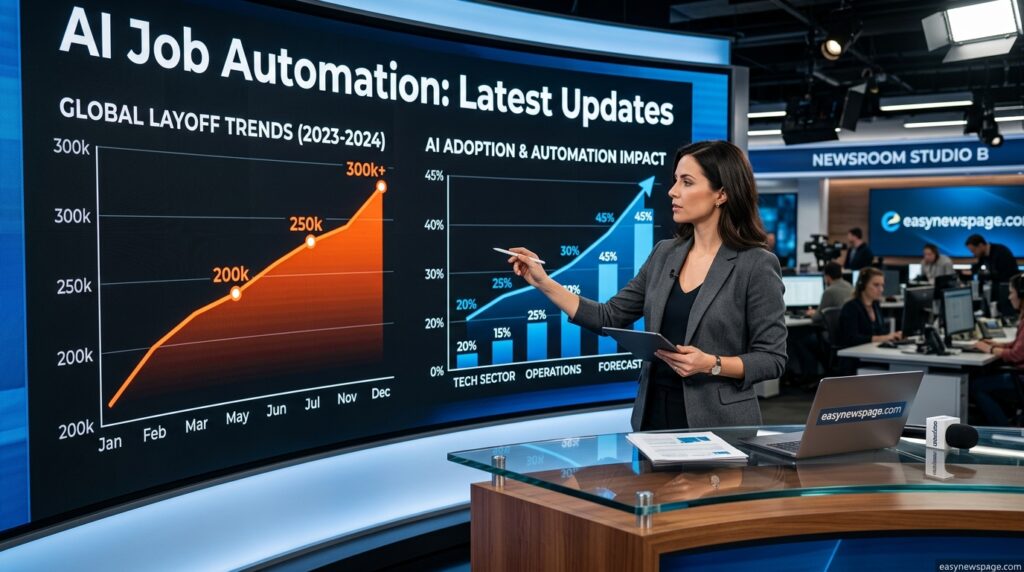
This is not another generic explainer of what AI automation is. It is a catch-up briefing built for people who have a rough sense of the AI-and-jobs conversation but have missed the specific, dated developments that moved the story forward. You’ll get the real numbers behind recent headline layoffs at major tech companies, what economists at Stanford and BCG are now saying about which workers are actually at risk, and a practical read on how to separate genuine automation-driven change from corporate spin.
Every section below is dated and sourced so you can see exactly when each development happened and how confident the underlying data actually is. By the end, you’ll be caught up on where the AI-and-jobs story genuinely stands as of August 2026, rather than where it stood when you last paid close attention.
Quick Facts Table
| Update | Figure | When |
|---|---|---|
| U.S. workers affected by AI-linked layoffs (2026 tracker total) | ~205,000 | Through August 2026 |
| Month AI-cited layoffs topped Challenger’s monthly rationale rankings | March–April 2026 | First time on record |
| Microsoft layoffs tied to AI data center investment | ~5,000 employees | Early July 2026 |
| Decline in employment for AI-exposed workers aged 22–25 | 16% relative to peers | Stanford study, Aug 2026 |
| Jobs Forrester forecasts will be automated in the U.S. by 2030 | 6% (~10.4 million roles) | Forrester forecast, 2026 |
| U.S. roles BCG projects will be “reshaped” (not eliminated) by AI within 2–3 years | 50–55% | BCG, March 2026 |
Quick Summary
The biggest update most people missed: AI-linked layoffs roughly matched all of 2025’s total by August 2026, with a tracking firm putting the number at around 205,000 U.S. workers, concentrated in customer service, data operations, and entry-level roles. At the same time, credible research firms are pushing back on the panic narrative, arguing that a meaningful share of layoffs blamed on AI are actually ordinary cost-cutting relabeled for optics — a pattern researchers now call AI washing.
Key Takeaways
- AI-cited layoffs accelerated sharply between January and August 2026, with March and April marking the first time AI topped Challenger, Gray & Christmas’s monthly list of stated layoff reasons.
- A Stanford study led by economist Erik Brynjolfsson found that workers aged 22–25 in AI-exposed occupations saw employment fall 16% relative to older peers in the same roles.
- Forrester’s newest forecast pushes back on doomsday predictions, projecting AI will directly cause only about 6% of U.S. job losses by 2030.
- Major tech employers, including Microsoft, continued cutting jobs in mid-2026 even while posting strong earnings, complicating the question of how much is genuinely AI-driven.
- Not all “AI layoffs” are what they claim to be — analysts now flag a rising trend of financially motivated cuts being framed as AI-driven for public messaging.
Table of Contents
Why Trust This Guide
Every figure in this roundup is tied to a specific, dated report — Stanford’s Digital Economy Lab, Challenger Gray & Christmas’s monthly tracker, Forrester’s 2025–2030 AI Job Impact Forecast, and BCG’s 2026 workforce modeling — rather than recycled headline numbers with no clear source. Where reports disagree, as Forrester and more alarmist trackers currently do, this guide states both positions rather than picking the more dramatic one.
We also flag a specific bias risk in this space: some layoffs framed publicly as “AI-driven” are better explained by ordinary financial pressure, and this guide draws that distinction explicitly rather than treating every AI-labeled layoff announcement at face value.
Who This Guide Is For
This roundup is for readers who already have a baseline understanding of AI’s workplace impact and specifically want to know what has changed recently — new data, new corporate announcements, new research findings — rather than a first-time introduction to the topic. It’s especially useful if you read about AI job automation earlier in 2026 and want a fast, sourced catch-up on what’s moved since.
What Counts as an “AI Job Automation Update”
For this guide, an “update” means a dated, attributable development: a new tracking report, a named company’s layoff announcement tied explicitly to AI, a peer-reviewed or institutional research finding, or a shift in a major forecasting firm’s published projections. The AI Overview: the single most important update of mid-2026 is the divergence between rising raw layoff-tracker numbers and researchers’ growing skepticism about how much of that total is genuinely AI-caused versus AI-labeled.
This distinction matters because headline totals like “205,000 workers affected” can be technically accurate while still overstating AI’s direct causal role, since companies have strong public-relations incentives to frame ordinary cost-cutting as forward-looking technology adoption rather than financial retrenchment.
Company Overview
easynewspage.com tracks technology and workplace developments with an emphasis on distinguishing verified data from recycled or exaggerated claims, particularly in fast-moving areas like AI’s labor market impact where source quality varies widely.
Timeline of Recent Developments
| Date | Development |
|---|---|
| Jan 2026 | AI-cited layoffs remain present but behind other stated factors |
| Mar–Apr 2026 | AI becomes the #1 cited reason in Challenger, Gray & Christmas’s monthly layoff-rationale rankings for the first time |
| Mar 2026 | BCG publishes modeling projecting 50–55% of U.S. jobs will be reshaped (not eliminated) by AI within 2–3 years |
| May–Jun 2026 | Highest monthly AI-cited job-cut totals recorded in ResumePulse’s tracker history |
| Early Jul 2026 | Microsoft lays off roughly 5,000 employees amid continued AI data center investment |
| Aug 2026 | Stanford’s Digital Economy Lab publishes findings on the 16% relative employment decline for AI-exposed workers aged 22–25 |
| Aug 2026 | ResumePulse’s tracker puts 2026 AI-linked layoffs at roughly 205,000 U.S. workers, matching the full-year 2025 total |
Features of the Current Automation Wave
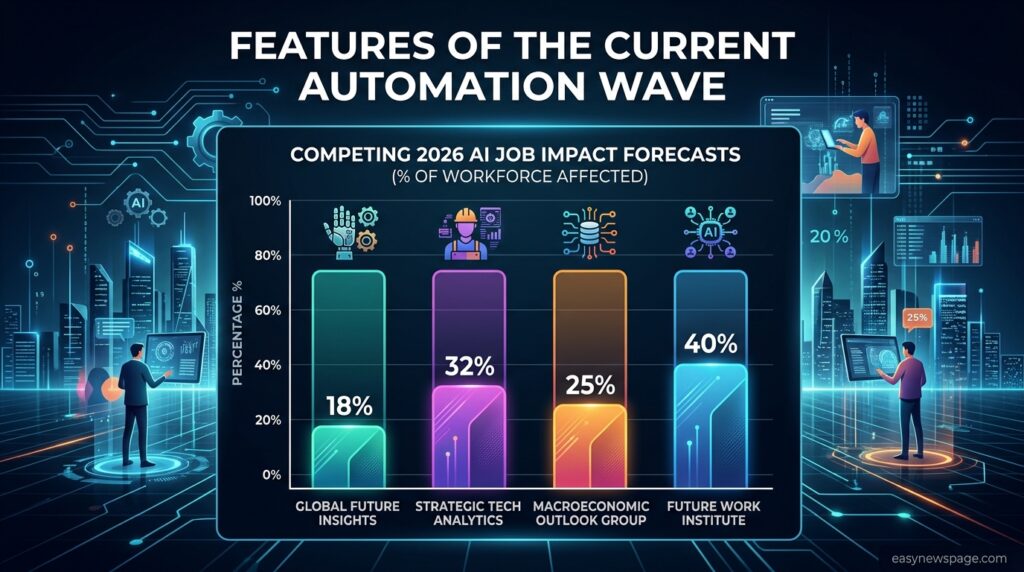
Back-office maturity: AI tools have reached reliable operational performance in customer service, data operations, and finance back-office workflows, which is why cuts are concentrated there rather than spread evenly across all job types. AI washing: A documented pattern where companies attribute financially motivated layoffs to AI adoption for public messaging reasons, making raw layoff totals harder to interpret at face value. Age-skewed impact: Recent research shows the clearest disruption signal is concentrated among early-career workers in AI-exposed roles rather than experienced workers in the same occupations. Divergent forecasts: Credible research firms currently disagree meaningfully on scale, from Forrester’s relatively modest 6% figure to more aggressive tracker-based estimates.
Feature Table
| Trend | What Changed Recently | Source |
|---|---|---|
| Layoff acceleration | AI-cited cuts roughly doubled since January 2026 | ResumePulse, Aug 2026 |
| Age-skewed disruption | 16% relative employment decline for ages 22–25 in exposed roles | Stanford, Aug 2026 |
| AI washing | Growing share of “AI layoffs” tied to financial pressure, not AI capability | Forrester, 2026 |
| Task reshaping vs elimination | 50–55% of US jobs reshaped, not eliminated, within 2–3 years | BCG, Mar 2026 |
How the Latest Layoffs Actually Happened
Most of 2026’s AI-linked layoffs did not happen as a single dramatic event — they built gradually, month over month, as companies expanded pilots that had already proven reliable in customer service and data-processing functions. The AI Overview: the acceleration in May and June 2026 coincided with several large employers reporting strong earnings alongside headcount reductions, which is part of why researchers now question how much of the total is purely AI-driven versus opportunistic cost-cutting timed to coincide with AI narratives.
Microsoft’s early-July 2026 layoffs of roughly 5,000 employees illustrate the pattern: the cuts came alongside continued heavy investment in AI data center infrastructure, following earlier downsizing at the company and similar moves at Amazon and Oracle over the prior two years. Coverage of these cuts has consistently noted that the direct causal link between AI deployment and specific layoff decisions remains difficult to measure precisely, even when executives reference AI in public statements.
Setup Guide: Tracking These Updates Yourself
Follow Challenger, Gray & Christmas’s monthly job-cut report for the most consistently methodical U.S. layoff-rationale data, since it tracks companies’ stated reasons over time rather than relying on media framing. Cross-check any single alarming statistic against at least one independent tracker or research institution before treating it as representative, given how widely current estimates vary.
Watch specifically for the “AI washing” distinction in company announcements — a layoff announcement that mentions AI investment alongside cuts is not the same as evidence that AI capability directly replaced those specific roles. Set a recurring reminder to revisit sector-specific data for your own industry, since national aggregate figures can mask very different realities across banking, retail, tech, and other sectors.
Step-by-Step: Reassessing Your Risk After These Updates
Compare your age and role type against the Stanford finding that early-career workers in AI-exposed occupations face the clearest measurable disruption, since this changes the calculus differently for a 24-year-old analyst than a 45-year-old in the same title. Check whether your employer’s recent public statements about AI or layoffs match the “AI washing” pattern — vague AI references paired with cuts in a period of otherwise strong earnings warrant more scrutiny, not less concern.
Reassess your reskilling timeline in light of the accelerated May–June 2026 layoff data if you work in customer service, data operations, or entry-level finance and tech roles, since these are the specific functions the latest tracking data flags as most affected. If you are early-career, weight the Stanford research most heavily, since it is the most methodologically specific update on age-based disruption currently available.
Industry Use Cases
Customer service: Continues to lead AI-linked layoff totals in 2026 trackers, consistent with agentic AI’s maturity in resolving support tickets end-to-end. Technology sector: Major employers like Microsoft continued cutting jobs in mid-2026 even amid strong AI-driven earnings, illustrating that AI investment and AI-caused layoffs are related but distinct phenomena. Finance back-office: Named specifically in 2026 tracking data as a concentration point for AI-linked cuts, consistent with earlier IMF sectoral exposure findings. Entry-level roles across sectors: The Stanford research gives the clearest updated evidence that this category faces measurably worse outcomes than experienced workers in the same occupations.
Benefits and Limitations of the New Data
The benefit of 2026’s expanded tracking data is specificity — researchers can now point to age-based, sector-based, and month-by-month patterns rather than relying on vague, aggregate predictions from a year or two earlier. This lets workers and employers make more targeted decisions instead of reacting to a single alarming headline number.
The limitation is that tracking methodology varies significantly between firms, and the “AI washing” phenomenon means self-reported causes in layoff announcements cannot be taken at face value. Forrester’s considerably lower 6% forecast and the more aggressive tracker-based totals cannot both be fully correct, which means readers should treat any single figure as one data point in an unsettled picture rather than a settled fact.
Pros & Cons Table
| Pros of the Latest Data | Cons of the Latest Data |
|---|---|
| More granular, age- and sector-specific findings | Significant disagreement between major forecasters |
| Clearer evidence on which age group is most affected | “AI washing” makes self-reported causes unreliable |
| Monthly tracking allows trend detection, not just snapshots | Raw totals can overstate AI’s direct causal role |
| Multiple independent institutions now publishing data | No single authoritative source has emerged |
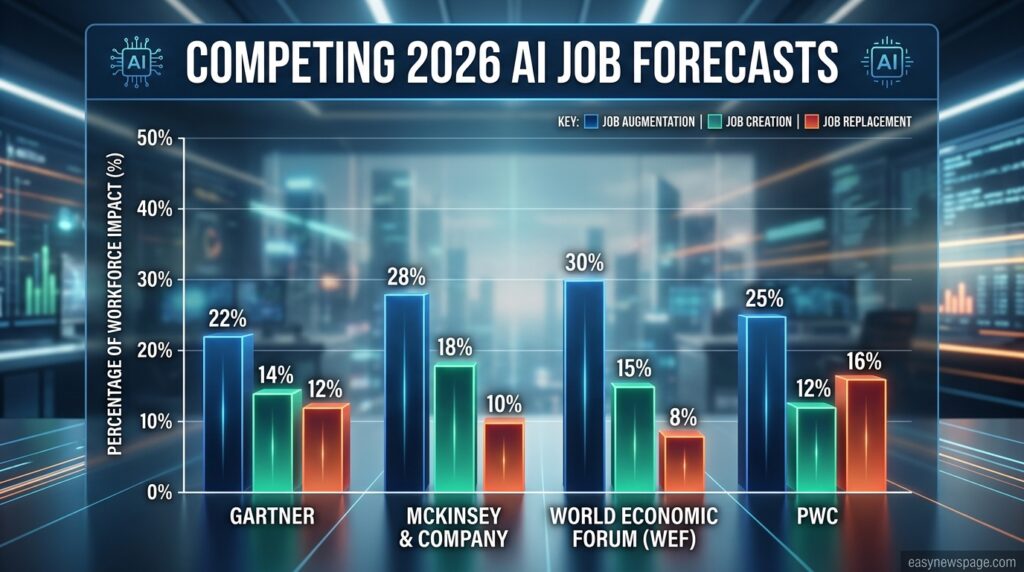
Comparison Table: Competing Forecasts
| Source | Scope | Headline Figure | Framing |
|---|---|---|---|
| ResumePulse tracker | U.S., 2026 to date | ~205,000 workers affected | Cumulative, layoff-announcement based |
| Challenger, Gray & Christmas | U.S., monthly | AI #1 cited reason, Mar–Apr 2026 | Stated-reason tracking |
| Forrester | U.S., through 2030 | ~6% of job losses (10.4M roles) | Skeptical of AI-washing inflated figures |
| BCG | U.S., 2–3 year horizon | 50–55% of jobs reshaped, not eliminated | Task-level reshaping, not headcount loss |
| Stanford Digital Economy Lab | U.S., age-specific | 16% relative decline, ages 22–25 | Peer-reviewed, age-segmented |
Security, Privacy and Compliance Angle
As AI tools take on more back-office and data-processing work, several of the newest reports flag rising scrutiny of how customer and employee data flows through the automation systems replacing those roles, particularly in finance and healthcare, where regulators already require human review of AI-influenced decisions. This compliance layer is part of why some sectors show slower headcount reduction than raw automation-capability data alone would predict.
Latest Updates Deep Dive
The single most consequential update since spring is the divergence between rising layoff totals and growing analyst skepticism about causation. ResumePulse’s August 2026 tracker puts AI-linked layoffs at roughly 205,000 U.S. workers, already matching the entirety of 2025 by midyear, with May and June recording the tracker’s highest monthly totals on record. Concentrated functions include customer service, data operations, entry-level software roles, and finance back offices.
At the same time, Forrester’s newest forecast directly challenges the more dramatic reading of that data, arguing that many companies announcing AI-related layoffs lack mature, deployed AI systems actually capable of replacing the eliminated roles — a pattern the firm labels AI washing, where financially motivated cuts are given an AI-forward public narrative. Forrester further predicts that over half of layoffs publicly attributed to AI will be quietly reversed as companies discover the operational difficulty of replacing experienced staff prematurely.
Layered on top of this, Stanford’s Digital Economy Lab published the most methodologically specific update of the year: workers aged 22 to 25 in AI-exposed occupations saw employment fall 16% relative to older peers in the same roles, while older workers in identical occupations have largely held steady. Lead researcher Erik Brynjolfsson has characterized this as evidence that AI substitutes for the formal, textbook-style knowledge younger workers typically bring to a role, while complementing the tacit, experience-based judgment senior workers have already built. Separately, BCG’s March 2026 modeling estimates that 50–55% of U.S. jobs will be substantially reshaped — not eliminated — within the next two to three years, reinforcing that task-level change, not blanket role elimination, remains the dominant pattern even amid the year’s most alarming layoff headlines.
Expert Tips
Weight age-specific and sector-specific findings, like Stanford’s research, more heavily than aggregate national figures, since your personal risk profile depends far more on your specific occupation and career stage than on any single national percentage. Treat any layoff announcement that cites AI without specific operational detail with mild skepticism, given the documented rise of AI washing in 2026 corporate communications. Revisit your risk assessment quarterly rather than once, since the data itself is shifting month to month.
Common Mistakes
A common mistake is treating the most alarming single number in a headline as the consensus view, when 2026’s research landscape is genuinely split between more conservative forecasts like Forrester’s and more aggressive tracker-based totals. Another is assuming a company’s own stated reason for a layoff is fully accurate, when analysts increasingly document a gap between announced AI-driven rationale and actual AI deployment maturity. Some readers also make the opposite mistake, dismissing all AI-linked layoff data as exaggerated PR, when the underlying tracking data does show a genuine, accelerating trend even after accounting for AI washing.
Read more: AI Job Automation in 2026: The Good, the Bad, and the Future
Myths vs Facts
Myth: Every layoff a company blames on AI is genuinely AI-caused. Fact: Forrester and other analysts now document a specific “AI washing” pattern where financially motivated cuts are given an AI-forward public narrative.
Myth: All age groups are equally affected by AI-exposed job disruption. Fact: Stanford’s 2026 research found a 16% relative employment decline specifically among workers aged 22–25 in AI-exposed roles, with older workers in the same occupations largely stable.
Myth: Researchers broadly agree on how many jobs AI will eliminate. Fact: Current forecasts range from Forrester’s roughly 6% of U.S. job losses by 2030 to considerably higher tracker-based estimates, reflecting real, unresolved disagreement.
Decision Matrix
| Criteria | Act Now | Monitor and Wait |
|---|---|---|
| Early-career (22–25) in AI-exposed role | Strongly recommended | Not recommended |
| Employer recently cited AI in a layoff announcement | Strongly recommended | Not recommended |
| Senior/experienced in same exposed occupation | Recommended (light) | Reasonable |
| Role in customer service, data ops, or finance back office | Strongly recommended | Not recommended |
| Role outside currently flagged high-impact functions | Optional | Reasonable |
Best Alternatives
If you want ongoing, low-effort tracking, following Challenger, Gray & Christmas’s monthly report is the most consistent option. If you want the most rigorous single research finding on age-based risk, Stanford’s Digital Economy Lab research is currently the most methodologically specific source available. If you want a counterbalance to alarmist headlines, Forrester’s AI Job Impact Forecast offers the most detailed skeptical case currently published.
FAQ
What is the newest AI job automation data as of August 2026?
A tracking firm reported roughly 205,000 U.S. workers affected by AI-linked layoffs through August 2026, already matching the full 2025 total, concentrated in customer service, data operations, and entry-level roles.
What is “AI washing” in the context of layoffs?
AI washing refers to companies publicly attributing layoffs to AI adoption when the actual driver is financial pressure, using AI as a forward-looking narrative rather than a proven operational replacement.
Which age group is most affected by AI job disruption right now?
Stanford research published in August 2026 found workers aged 22 to 25 in AI-exposed occupations saw employment fall 16% relative to older peers in the same roles.
Do researchers agree on how many jobs AI will eliminate?
No. Forecasts vary considerably, from Forrester’s estimate of roughly 6% of U.S. job losses by 2030 to considerably higher totals from layoff-tracking firms using different methodologies.
Why did Microsoft lay off workers despite strong AI-driven earnings?
Microsoft’s early-July 2026 layoffs of roughly 5,000 employees came alongside continued heavy AI data center investment, illustrating that AI-related capital spending and direct AI-caused job elimination are related but distinct issues.
Is task reshaping the same as job elimination?
No. BCG’s 2026 modeling found that 50–55% of U.S. jobs will be substantially reshaped by AI within 2–3 years, but reshaping means changed responsibilities, not necessarily role elimination.
Rating Scorecard
| Category | Score (out of 10) | Notes |
|---|---|---|
| Recency (reflects latest 2026 data) | 10 | Includes developments through August 2026 |
| Source diversity | 9 | Spans trackers, forecasters, and peer-reviewed research |
| Balance (includes skeptical viewpoints) | 9 | Includes Forrester’s AI washing critique |
| Practical usefulness | 8 | Includes risk-reassessment steps |
| Data quality transparency | 8 | Notes disagreement between sources explicitly |
Conclusion
The AI-and-jobs story shifted meaningfully between spring and late summer 2026, and the update most worth knowing is not a single dramatic number but the growing split between rising layoff-tracker totals and researchers’ increasing skepticism about how much of that total is genuinely AI-caused. Roughly 205,000 U.S. workers were affected by AI-linked layoffs through August, concentrated in customer service, data operations, and entry-level roles, while Forrester’s research makes a credible case that a real share of that total reflects “AI washing” — ordinary financial cuts wrapped in AI-forward messaging.
The most methodologically solid new finding is Stanford’s: early-career workers in AI-exposed occupations are experiencing measurably worse outcomes than experienced peers in the same roles, a far more precise signal than any national aggregate percentage. BCG’s parallel finding, that half or more of U.S. jobs will be reshaped rather than eliminated over the next few years, reinforces that task-level change remains the dominant pattern even amid the year’s most alarming headlines.
The overall moral of these updates is that the AI-and-jobs conversation has matured from broad prediction into contested, evidence-based debate, and readers are better served by tracking specific, sourced developments than by reacting to whichever single statistic is circulating this week. Stay closest to the data that matches your actual age group, occupation, and sector, and treat any company’s self-reported reasoning with the same scrutiny researchers now apply.
Official Sources
- Stanford Digital Economy Lab, “Canaries in the Coal Mine,” 2026
- Forrester, The Forrester AI Job Impact Forecast, US, 2025–2030
- Challenger, Gray & Christmas, monthly job-cut reports, 2026
- BCG, “AI Will Reshape More Jobs Than It Replaces,” March 2026
- ResumePulse AI-linked layoff tracker, August 2026
- Fortune, reporting on AI and workforce change, August 2026
Author Bio
This roundup was researched and written by the easynewspage.com editorial team, which specializes in dated, sourced tracking of fast-moving technology and workplace stories. Every figure above is attributed to its originating report, and this article was last updated in August 2026.