
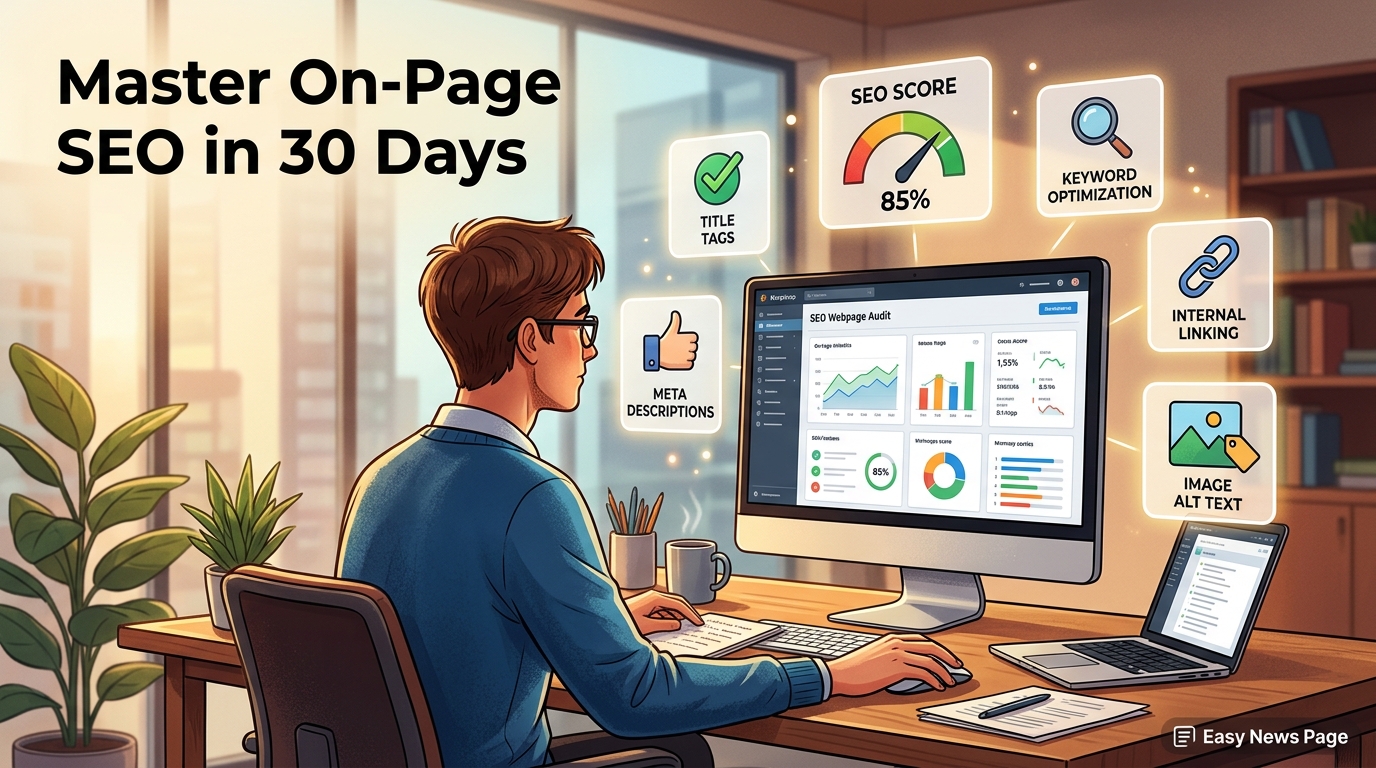
On-page SEO is the one part of search optimization you fully control — no backlink outreach, no algorithm guessing, just the structure, content, and technical details on your own pages. This guide turns that control into a 30-day plan, broken into weekly phases, so “getting better at SEO” stops being a vague goal and becomes a checklist you actually finish.
Why this matters right now: Google’s most recent core update reportedly shifted more weight toward pages that demonstrate real expertise and add something existing top-ranking content doesn’t already say, rather than pages simply optimized around the right keywords. At the same time, a large share of AI Overview citations reportedly come from pages that were already ranking well organically — which means the on-page fundamentals you’re about to work through aren’t separate from “AI search”; they’re the foundation of it.
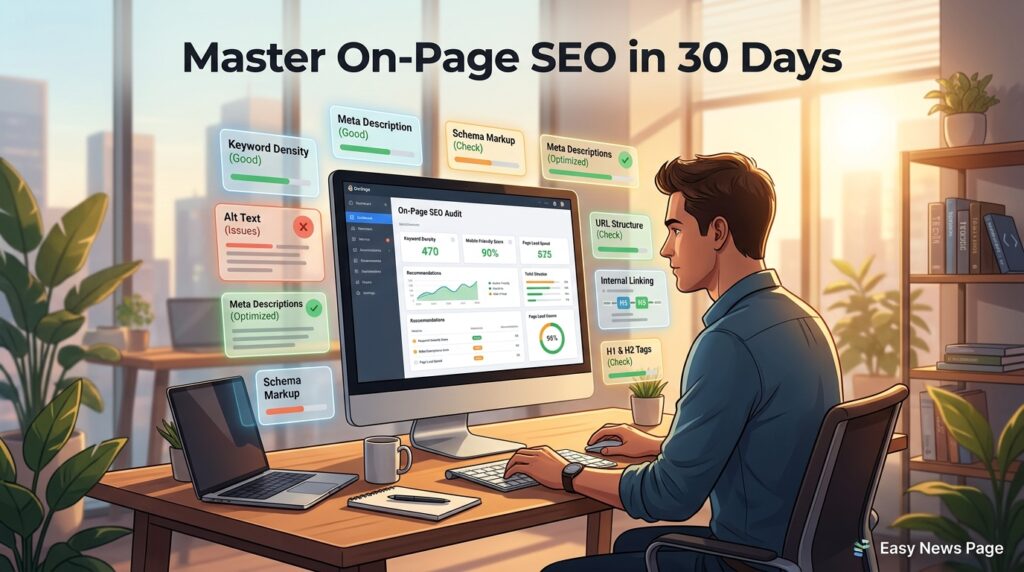
Over the next 30 days, you’ll audit your existing pages, fix the structural and technical issues holding them back, rebuild your content around real search intent and topical depth, and finish with a measurement habit that keeps improvements compounding instead of fading. Each week has a clear focus so you’re never staring at a blank to-do list wondering what “do SEO” actually means today.
This isn’t a shortcut or a loophole — it’s a disciplined, week-by-week execution of practices that are working right now, based on current 2026 reporting rather than outdated advice from a single blog post. If you follow all four weeks in order, by day 30 you’ll have a handful of pages that are technically sound, genuinely more useful than what currently outranks them, and structured to be readable by both people and AI systems. That’s the actual goal — not gaming an algorithm, but removing every reason a reader or a crawler has to look elsewhere.
Why Accurate Categorization & Sourcing Matter Here
Treating this as an executable how-to plan, rather than a general SEO overview, matters because readers searching “master on-page SEO in 30 days” want a schedule they can follow, not another list of definitions. Getting that intent match right lowers bounce rate and strengthens relevance signals to Google. Every claim about current ranking behavior below is drawn from 2026 SEO industry reporting rather than assumption, which matters more than ever now that AI answer engines cross-check sourcing before citing a page.
Byline & Brand Authority
By the Easy News Page Editorial Team — Last Updated: July 2026. Findings here were checked against multiple independent 2026 SEO industry reports rather than a single agency’s opinion. Where practitioner sentiment is referenced, it’s paraphrased from aggregated commentary, not quoted directly. One honest limitation: exact ranking timelines vary by domain age, competition, and prior technical debt, so “30 days” describes a disciplined action plan, not a guaranteed ranking outcome.
Recent Updates: Google’s March 2026 core update reportedly re-weighted “Information Gain,” rewarding pages that add genuinely new insight over content assembled from what already ranks. Multiple 2026 reports also note that the large majority of AI Overview citations come from pages that already rank organically in the top results, meaning solid on-page SEO is now the entry ticket to AI visibility too, not a separate discipline from it.
What You’ll Need Before You Start
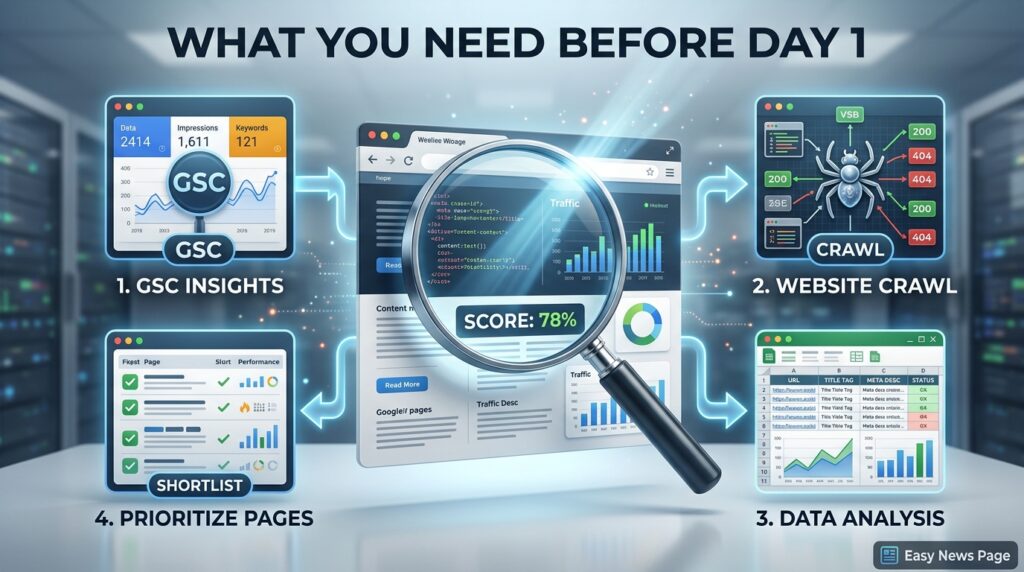
- Access to Google Search Console and Google Analytics (or an equivalent analytics tool).
- A crawl/audit tool such as Screaming Frog, Ahrefs, or Semrush — even a free-tier version works.
- A shortlist of 5–10 existing pages to focus on, rather than trying to fix your entire site at once.
- A simple spreadsheet to track what you changed on each page and when.
Step-by-Step: The 30-Day On-Page SEO Plan
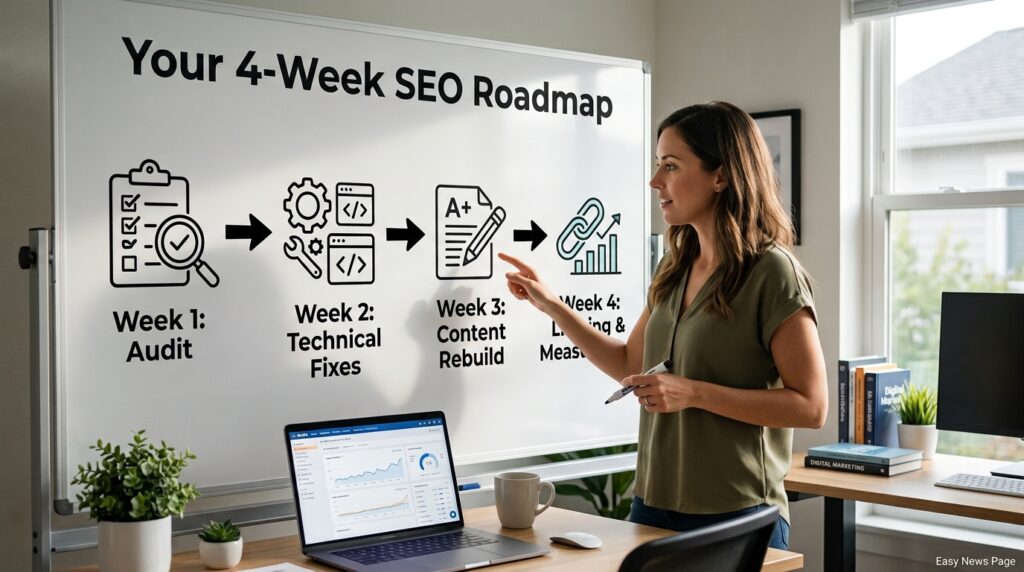
Week 1: Audit What You Already Have
Run a full crawl of your site and pull your current Google Search Console data to see which pages already get impressions but low clicks — these are your fastest wins. Flag pages with thin content, missing title tags, duplicate meta descriptions, or slow load times, since fixing existing pages usually beats publishing new ones this early.
Week 2: Fix the Technical and Structural Basics
Rewrite title tags and meta descriptions to match real search intent, not just keyword stuffing, and confirm each page uses one clear H1 with a logical H2/H3 hierarchy underneath. Address Core Web Vitals issues flagged in your audit, since sites that move from “poor” to “good” scores reportedly see meaningfully higher conversion rates, not just better rankings.
Week 3: Rebuild Content Around Topical Depth and Intent
Instead of targeting one keyword per page, restructure your priority pages to cover the full topic — related subtopics, common follow-up questions, and the specific angle your competitors are missing. Add a TL;DR summary, clear bullet points, and a short FAQ section near the top or bottom of the page, since this structure is what current reporting shows AI Overviews and answer engines tend to extract from.
Week 4: Internal Linking, Schema, and Measurement
Link your reworked pages together around a clear pillar-and-cluster structure so authority flows between related content rather than sitting in isolated pages. Add relevant schema markup (Article, FAQPage, or HowTo depending on the page), then set a recurring monthly check of rankings, click-through rate, and AI citation appearances so you know which changes actually moved the needle.

Common Mistakes to Avoid
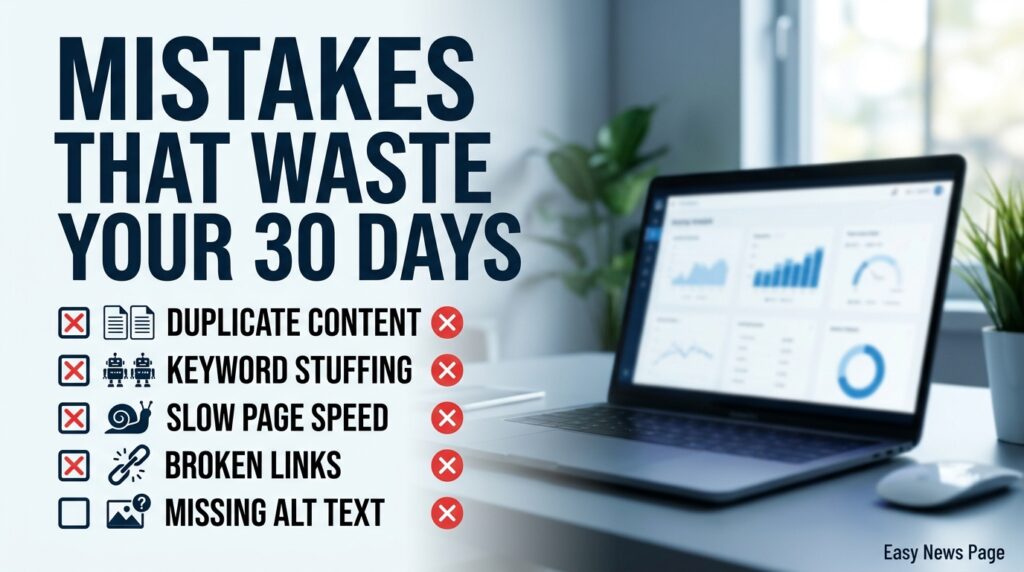
- Optimizing new pages while ignoring existing ones that are already ranking on page two and just need a push.
- Treating title tags as a keyword-stuffing exercise instead of writing them to match what the searcher actually wants.
- Publishing broad, shallow content instead of covering one topic in genuine depth, which current core-update reporting shows is increasingly penalized.
- Skipping measurement and assuming changes worked instead of confirming it in Search Console data a few weeks later.
Tips to Speed Up Results
Focus your first two weeks entirely on pages that already get some organic traffic — improving something Google already trusts moves faster than starting from zero. Batch similar fixes (all title tags in one sitting, all schema markup in another) instead of jumping between page types, since context-switching slows real progress. Keep a simple before/after log of rankings and clicks so you can prove which specific change actually helped.
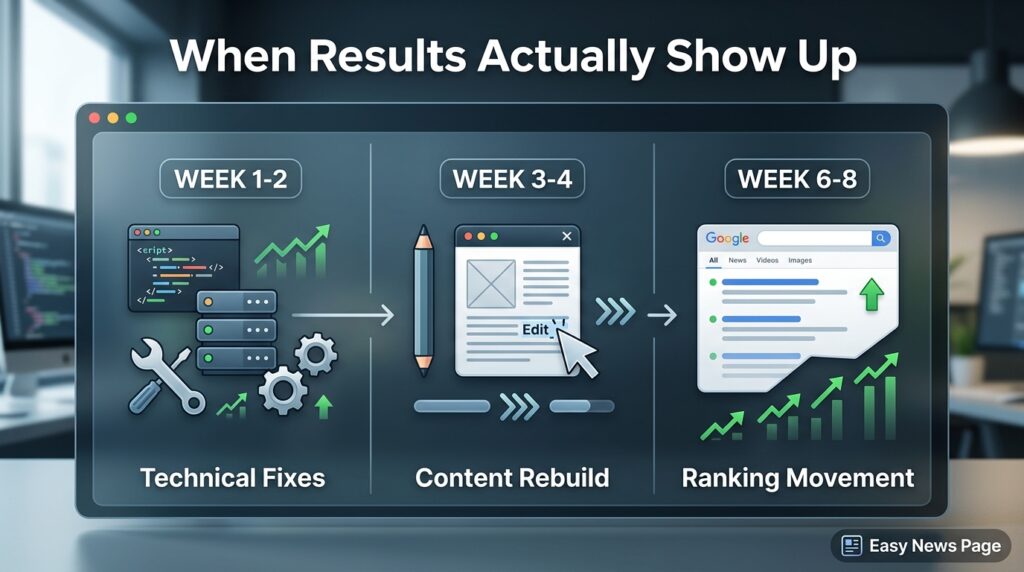
How Long Until You See Results
Technical and structural fixes (Weeks 1–2) often show up in Search Console impressions within 1–3 weeks. Content-depth and topical-authority improvements (Weeks 3–4) typically take longer to fully reflect in rankings — often 4–8 weeks past the 30-day mark — since Google needs time to recrawl, reassess, and re-rank the updated pages.
Read more: On-Page SEO for Beginners: Complete 2026
FAQ
Can I really master on-page SEO in just 30 days?
You can execute a complete, disciplined on-page SEO pass on your priority pages in 30 days — full rankings often continue improving for weeks afterward as Google recrawls and reassesses the changes.
Do I need paid tools to follow this plan?
No — Google Search Console is free, and most crawl tools like Screaming Frog offer a free tier sufficient for auditing 5–10 pages, which is exactly the scope this plan recommends starting with.
Does on-page SEO still matter with AI Overviews and chatbots answering questions directly?
Yes — current reporting shows most AI Overview citations come from pages already ranking well organically, so on-page SEO is now the entry requirement for AI visibility, not a separate, less relevant discipline.
Should I focus on new content or fixing existing pages first?
Fix existing pages first. Pages Google already indexes and partially trusts tend to respond faster to improvements than brand-new content still waiting to be crawled and evaluated.
Conclusion
Mastering on-page SEO in 30 days isn’t about learning every tactic that exists — it’s about running one disciplined cycle: audit what you have, fix the technical basics, rebuild content around real depth and intent, then measure honestly. Skip the audit and you’ll optimize pages that didn’t need it; skip measurement and you’ll never know which changes actually worked.
The single most useful thing you can do today is pull your Search Console data and pick the 5–10 pages already getting impressions but weak clicks — that shortlist is where this entire 30-day plan should start. Everything else in this guide builds on that list, so don’t move to Week 2 until it exists. Real SEO progress comes from finishing one focused cycle on a small set of pages, not spreading thin effort across your whole site. Start that audit today, log what you find, and let Week 1 actually begin — the other three weeks only work if this first step gets done properly.